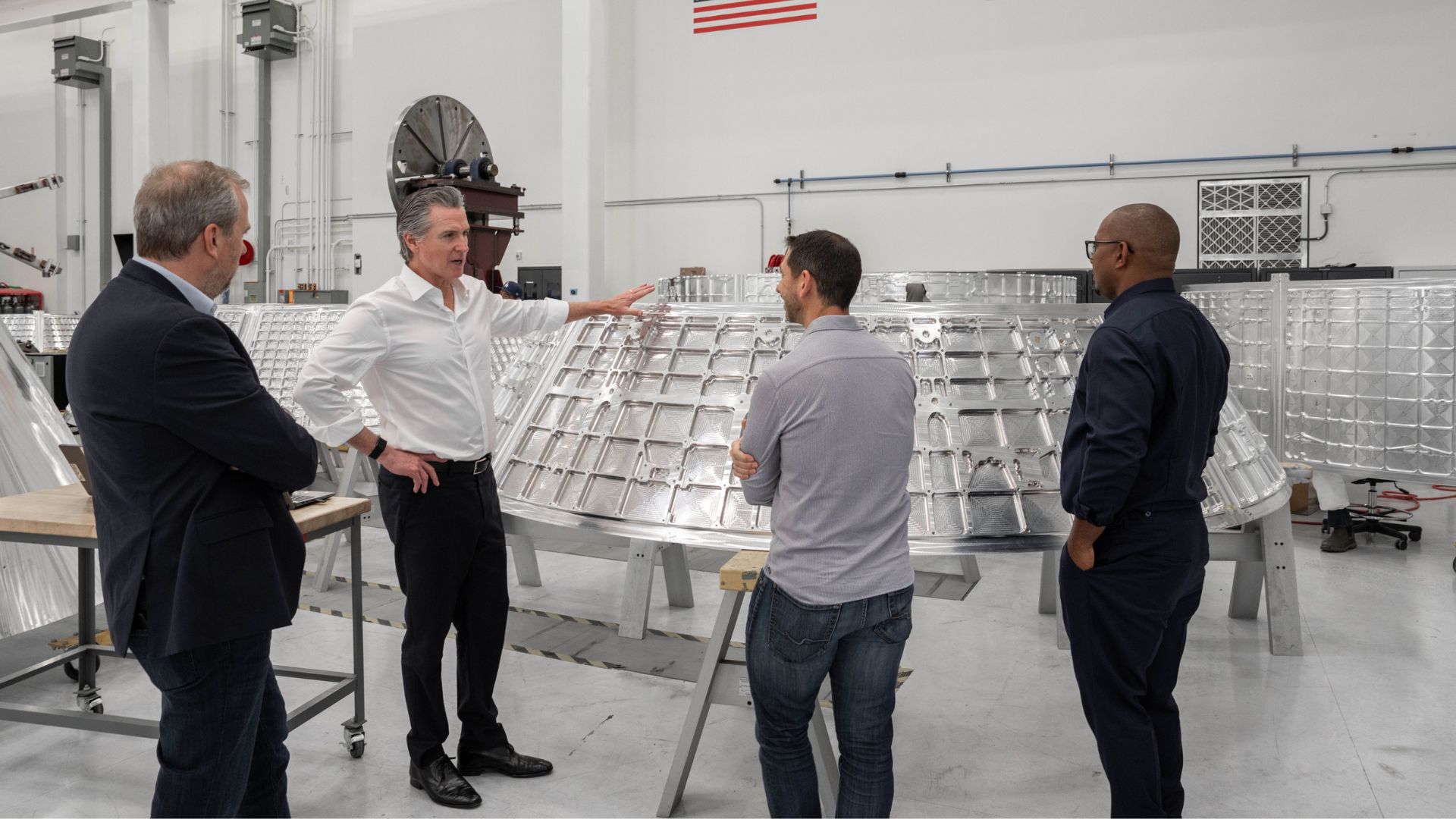

California – California Governor Gavin Newsom stepped onto the manufacturing floor at Vast’s Long Beach headquarters with a clear message: the next era of human spaceflight is not only being planned in California, it is being built there.
The June 5 visit brought Newsom together with Long Beach Mayor Rex Richardson inside the fast-growing aerospace company’s facility in the city’s “Space Beach” corridor. The governor’s office described Long Beach as a major aerospace and space technology hub, supported by ports, military bases, engineering schools, advanced manufacturing and a deep Southern California talent pool. California, the state said, is home to one-third of the nation’s space technology companies.
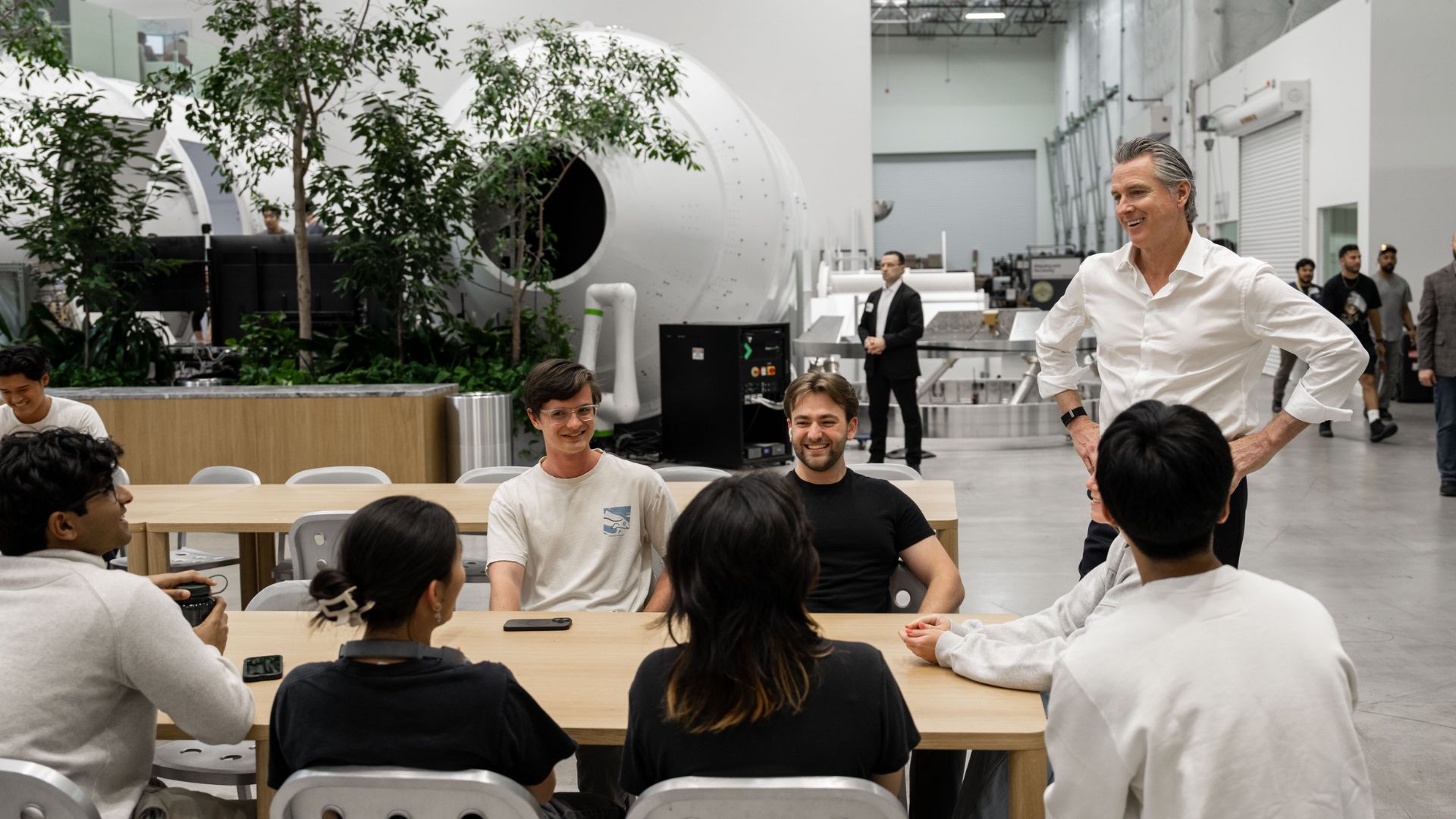
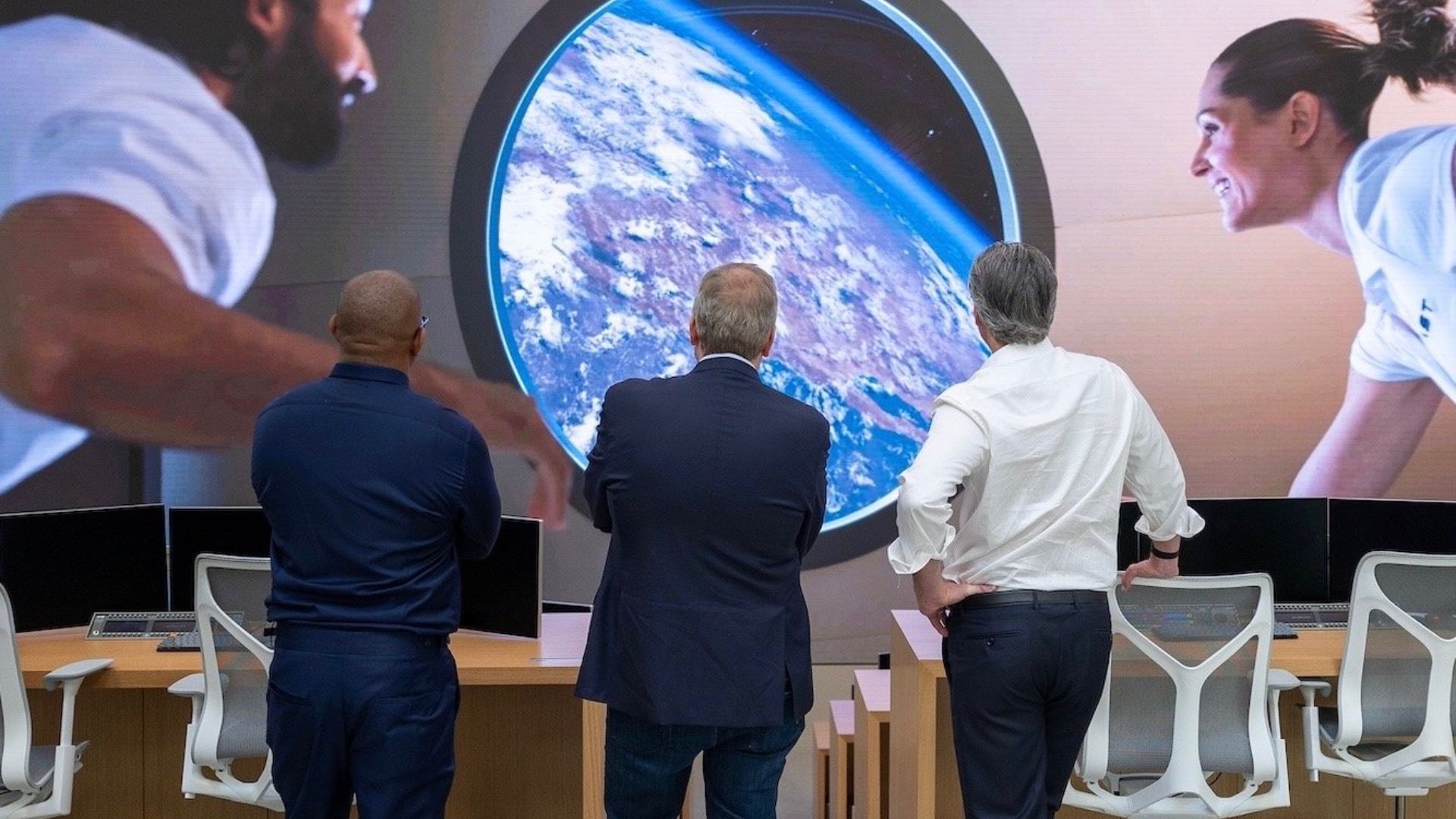
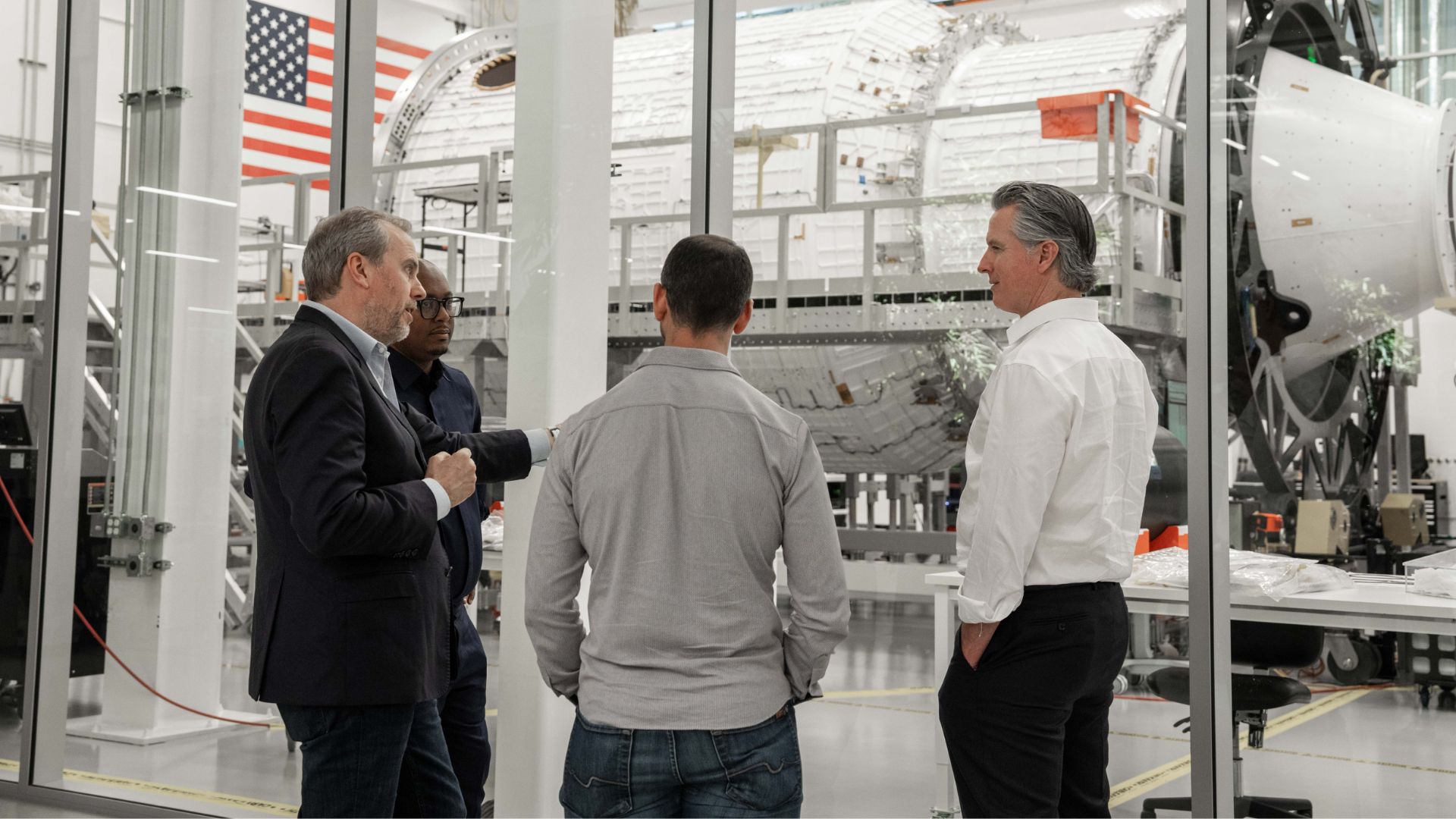
For Vast, the tour was a chance to show more than renderings and ambition. Inside the company’s headquarters, Newsom and Richardson saw hardware tied to Haven-1, the private space station Vast is preparing for launch in 2027. Photos from the visit showed the governor in front of a large Earth display, walking through bright manufacturing areas, and speaking with young engineers and staff near large white space station structures under assembly.
The setting gave the event a mix of factory-floor realism and science-fiction scale. There were no distant promises floating on a screen alone. There were modules, tools, workers, and the unmistakable feel of a company racing against time as the International Space Station approaches retirement around 2030.
Newsom framed the visit as part of a larger California story. “The future happens here first in the Golden State and companies like Vast are leading the way in the commercial space industry,” he said in the state release. “California’s unparalleled innovation ecosystem and skilled workforce is fueling the Golden Age of science and discovery for the next generation of explorers.”
Vast, founded in 2021 and headquartered in Long Beach, is focused on building commercial space stations and long-duration human habitation systems in low Earth orbit. Its flagship project, Haven-1, is described by the company as the world’s first commercial space station. Vast says Haven-1 is targeted to launch in 2027 and is designed as a human-centered station for private astronauts and government missions. The station is planned for a crew of four, with 45 cubic meters of habitable volume, 80 cubic meters of pressurized volume, a 1.1-meter domed window, deployable solar power and SpaceX-supported connectivity.
The company has also said Haven-1 is contracted to launch on a SpaceX Falcon 9 from Cape Canaveral, Florida, with the station moving through integration after earlier testing milestones.
The timing matters. NASA is preparing for a future in which it becomes one of several customers using commercial stations in low Earth orbit, rather than the sole anchor of a government-operated orbital laboratory. NASA has supported work on Haven-1, including testing of a critical air filter system at Marshall Space Flight Center. The agency said such work helps validate commercial station systems while giving NASA insight into future low Earth orbit services.
That post-ISS race is becoming more urgent, and Vast is trying to move quickly. In March, the company announced $500 million in new financing, including $300 million in Series A equity and $200 million in debt, to accelerate production of its Haven space stations. Vast said more than $1 billion had been invested to date in its space station technologies and facilities.
Long Beach is trying to turn that momentum into a local economic identity. Under Mayor Richardson’s Grow Long Beach initiative, the city has leaned into aerospace, advanced manufacturing, goods movement and other growth sectors. The city says companies including Vast, True Anomaly and Nikon have helped position Long Beach at the front of the commercial space and innovation economy.
The “Space Beach” label also carries a deeper history. California’s aerospace roots stretch from Apollo and the Space Shuttle to NASA centers at Ames, Armstrong and the Jet Propulsion Laboratory. The state says it leads the nation in space technology venture capital, corporate aerospace research and development spending, and accounts for roughly 40% of all U.S. space-technology patents.
Newsom’s stop at Vast did not settle every debate about California’s business climate, high costs or competition from other states. But it did place a spotlight on something tangible: skilled workers in Long Beach building hardware meant to keep people living and working in orbit after the ISS era fades.
For California, the visit was a declaration of industrial confidence. For Long Beach, it was another sign that “Space Beach” is becoming more than a nickname. And for Vast, the message was simple: the next chapter of space stations is no longer just a government story. It is being welded, tested and assembled on the coast of Southern California.