
Sacramento’s Measure U began as a rescue line. In 2012, after years of pressure from the Great Recession, voters approved a temporary half-cent sales tax to help restore services that had been cut or reduced.
Six years later, the promise grew larger.
Voters approved a new version of the tax in 2018, extending it and raising it to a full cent. What started as a temporary fix became one of the city’s most important financial engines.
Today, that one-cent transactions and use tax touches parks, youth programs, libraries, homelessness response, public safety, arts, housing work, economic development and basic city operations.
Now, in 2026, Measure U stands at a difficult point. The money is real. The need is real. The public questions are real, too. For the fiscal year that began July 1, 2025, and ends June 30, 2026, Sacramento expects Measure U to generate about $135 million in tax revenue.
The city’s own Measure U summary lists about $161.3 million in funded programs in the FY 2025/26 approved budget. That number shows both the reach of the tax and the complexity of tracking it. Measure U is not a small side account anymore. It is woven into the way Sacramento pays for community services.
Read also: Sacramento’s rivers carry more than water. They carry the weight of public decisions.
The city has taken an important step toward transparency by putting much of this information in public view. Sacramento’s Measure U Budget Dashboard lets residents explore spending by priority area and department, view revenue trends and projections, and check quarterly status updates for funded programs.
When the city announced the tool in 2025, Special Projects Manager Ash Roughani said, “We invite the public to explore the dashboard and learn how Measure U supports safer neighborhoods, vibrant parks, and stronger community programs.”

He added that the city is committed to keeping the public informed about how Measure U dollars are allocated and used.
That dashboard matters because Measure U is no longer judged only by what voters hoped it would do. It is now judged by what the city can prove it has done. Sacramento’s official Measure U page breaks FY 2025/26 spending into broad categories: $39.3 million for Community Response, $24.1 million for Community Investment, $23.3 million for Youth, $18.7 million for Public Safety, $14.7 million for Library, $14.1 million for Homelessness, $10.8 million for Miscellaneous, $6.9 million for Inclusive Economic Development, $4.8 million for Affordable Housing, $3.9 million for Arts and Creative Edge, and $531,000 for Climate Action.
The list is wide. It is also revealing. Measure U dollars do not go to one single promise. They move through many doors.
Some of those doors are easy for the public to understand. Youth programs, aquatics, community centers, violence prevention, expanded learning, libraries and homelessness services connect clearly to the community-facing language often used around Measure U.
Other items are harder to explain in a simple sentence. Community Investment includes facility reinvestment, Americans with Disabilities Act compliance work, fleet acquisitions, park operations, older adult services, cemetery support, and fiscal and technology support for the Youth, Parks and Community Enrichment Department.
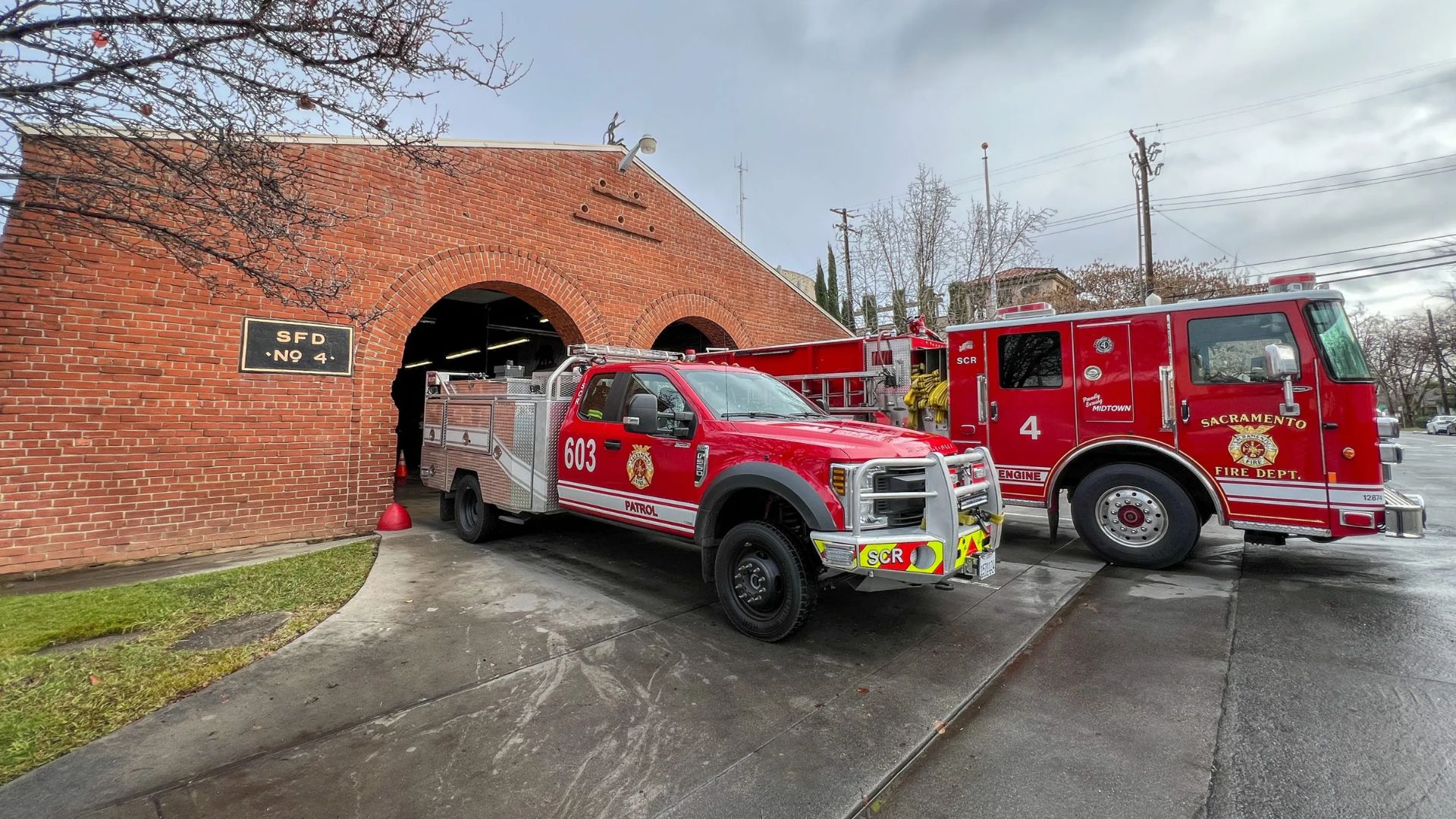
Public Safety includes police and fire hiring pipeline support, park safety services, animal enforcement and related field services. Miscellaneous includes commission stipends, expanded technology support, the Sacramento Utility Rate Assistance program and citywide employee costs tied to Measure U-funded staffing.
That mix is where the debate begins. A repaired roof can keep a public building open. New software can help a department function. ADA work can make city services more accessible. Those are not meaningless expenses.
But they raise a sharper question: when voters hear “community sales tax,” do they imagine direct youth programming, public safety response, homelessness outreach and neighborhood services, or do they also expect building systems, technical equipment and internal support costs? Sacramento’s own oversight structure is now pressing that question more directly.
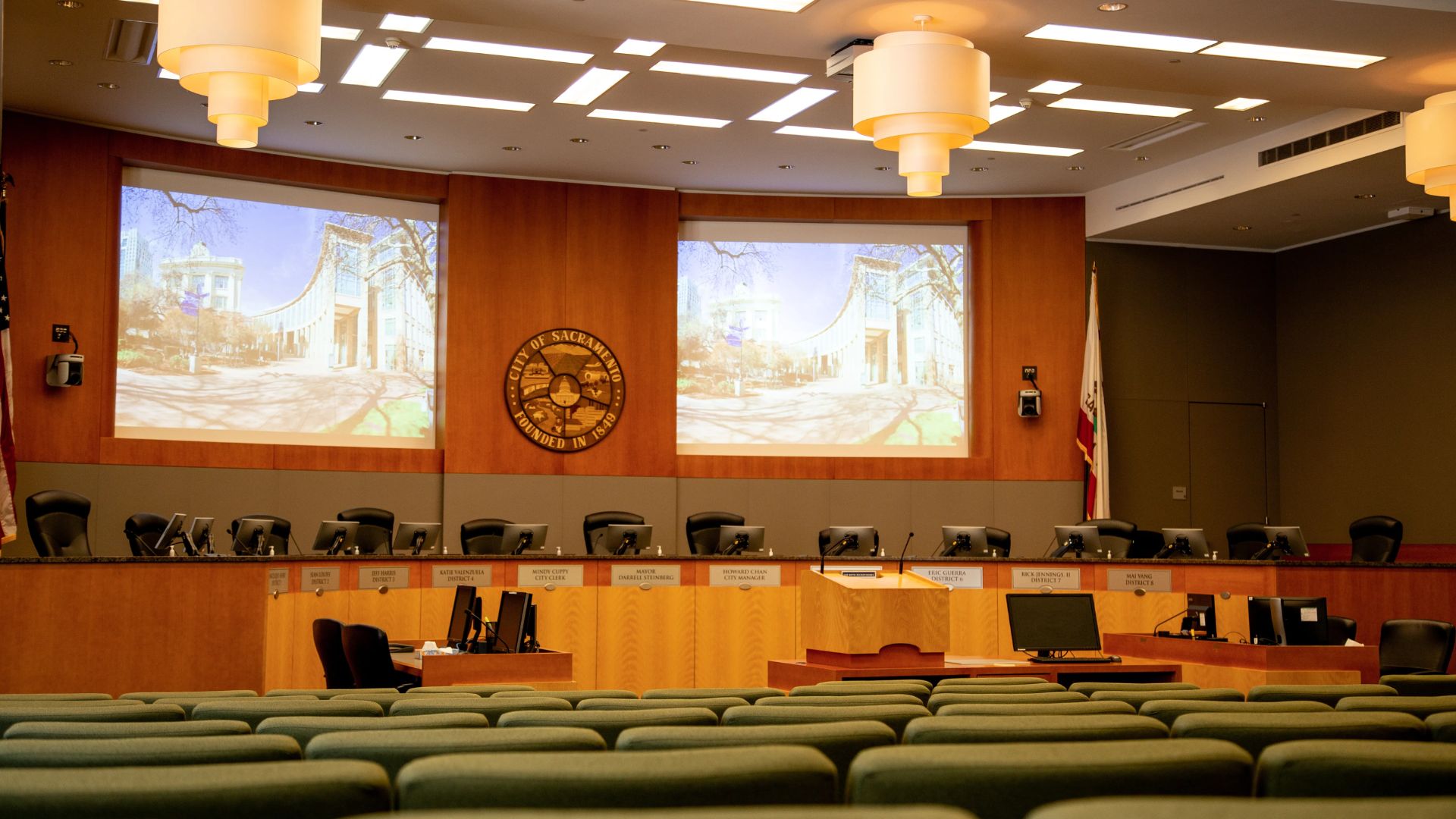
The Measure U Community Advisory Commission exists to review spending, make non-binding recommendations to the City Council, and help ensure that expenditures reflect community priorities.
The city says the commission reviews Measure U revenues and expenditures, provides funding recommendations, and reports to the public on how the dollars are spent. But the word “non-binding” is important. The commission can advise. It can warn. It can push for better data. Final budget authority remains with the Council.
In its recent analysis, the commission put the issue plainly. Sacramento, it wrote, is facing “a fiscal environment defined by a structural deficit, reduced external funding, and residents who are already carrying significant economic strain.”
That fiscal pressure, the commission argued, demands a shift in how Measure U is managed: not simply as a revenue stream, but as an “impact-driven investment strategy” that protects taxpayer trust and delivers measurable community outcomes.
The strongest warning came in the discussion of metrics. According to the commission’s report, at least 17 programs receiving a combined $19 million in Measure U funding had no reported metrics.
The recommendation was direct: programs unable to show measurable impact should provide impact metrics before they continue receiving funding. That is a serious statement. It does not say the programs are bad. It says the public cannot fully judge them without proof.
The commission also pointed to specific expenses it believed should be paid by the General Fund rather than Measure U. Its examples included $2.2 million for the “repair or replacement of roofs, structural elements, plumbing, electrical service, mechanical systems, and exterior coatings of City facilities,” $58,000 for “the management of department-wide technical equipment and software expenditures,” and $500,000 tied to legal compliance and removal of physical barriers for people with disabilities. The commission recognized that these functions are important to city operations, but it argued they should not be carried by Measure U.
That distinction matters because Sacramento is not writing its budget from a place of comfort. On June 10, 2026, the city announced adoption of a $1.7 billion budget for FY 2026/27, including an $898.3 million General Fund.
The budget closed a $66.2 million General Fund gap through expenditure reductions, operational efficiencies, funding shifts and revenue strategies. In that kind of environment, every dedicated dollar becomes more powerful, and every allocation becomes more political.
Measure U can protect some services from deeper cuts, but it can also blur the line between enhancement and backfill. If a city uses Measure U to support a program that would otherwise compete in the General Fund, the tax is helping preserve a priority. If it uses Measure U for internal costs that residents do not easily connect to voter promises, public confidence can weaken.
The same dollar can be described in two ways: as practical support for city operations, or as money pulled away from direct neighborhood impact. The truth often sits somewhere in the middle, which is why public metrics matter so much.
The city’s FY 2025/26 approved budget also shows the strain inside the fund itself. Budget documents state that Measure U was projected to generate about $135 million in revenue for FY 2025/26 and that the fund provided $137.4 million for ongoing programs and services across affordable housing, arts, climate action, community investment, community response, homelessness, inclusive economic development, libraries, public safety and youth.
The same budget section says the Measure U Fund was projecting a deficit at the end of FY 2025/26 because growth in ongoing program costs, especially labor, services and supplies, was higher than revenue growth.
That is the quiet alarm bell beneath the larger numbers. A tax can generate $135 million and still not feel like enough. Costs rise. Labor contracts rise. Service needs rise. Homelessness does not pause for budget cycles. Parks still need maintenance. Libraries still need support. Police, fire, youth and community response programs all need staff. The result is a difficult budget reality: Measure U is large enough to matter, but not large enough to solve everything.
The homelessness numbers show why the public may feel impatient. Sacramento County’s 2026 Point-in-Time Count estimated 7,458 people experiencing homelessness, a 13% increase from the previous count two years earlier.
Sacramento Steps Forward reported that shelter capacity and system connections reached an all-time high, but the total count still rose. That is the hard edge of outcome measurement. Spending on homelessness response may increase. Shelter use may improve. Outreach may expand. But if the public sees more tents, more people in crisis and more pressure on neighborhoods, residents will ask whether the dollars are changing conditions fast enough.
Public safety data creates another test.
Sacramento police provide downloadable Computer Aided Dispatch and Records Management System data through the city’s Open Data Portal, including current year-to-date records and five years of archived files. That makes it possible, at least in theory, to compare district-level calls, reported crimes and neighborhood patterns against Measure U-funded safety or prevention investments. But the police department also warns that this data has limits and should not be directly compared with official UCR or NIBRS statistics because of reclassification, amendments and other reporting issues. The data is useful, but it must be handled carefully.
This is exactly where Sacramento’s next phase of accountability should move. The city already shows where money goes. The next question is what changed because of it. For youth programs, that could mean participation, retention, school-year engagement, summer program access, job readiness, or repeat attendance.
For violence prevention, it could mean neighborhood-specific outcomes, referrals completed, conflicts interrupted, or youth connected to ongoing support. For homelessness, it could mean shelter exits into stable housing, returns to homelessness, case management outcomes, or service connections that last beyond intake. For parks, it could mean maintenance response times, usable facility hours, program attendance, or resident satisfaction where reliable data exists.
The commission has already identified the weakness of activity counts. Counting how many services were delivered does not always show whether the service worked. A shelter program can report scheduled intakes without showing housing retention. A case management program can count clients served without showing long-term stability. An economic development program can count business assistance without proving net job growth or broader economic improvement. The commission’s point is simple: Sacramento should move from “what did we do?” to “did it change anything?”
That change will not be easy. City staff have already said broader performance measurement work takes time and that the city has also been focused on closing budget deficits. In a March 2025 memo attached to a Measure U commission item, city staff wrote that they appreciated the commission’s work on accountability but noted that citywide change management initiatives require time, training and coordination. Staff also warned that new reporting requirements could strain limited resources while the city was preparing a difficult budget.
That response is not unreasonable. Data collection costs money. Staff time is finite. A badly designed reporting system can become another administrative burden instead of a tool for better decisions. But the opposite risk is larger: without clear and public outcome measures, Sacramento may keep funding programs because they are familiar, politically supported, or embedded in department budgets, not because they are producing strong results.
Measure U’s promise has always been bigger than accounting. It is about trust. Voters agreed to pay more on purchases because the city said the money would protect and improve services. The tax has helped Sacramento maintain a broad range of programs during difficult years.
It has supported youth services, public safety, arts, libraries, housing work, homelessness response and neighborhood investments. The public dashboard gives residents a clearer window into that spending than they had before. The commission gives the public a formal oversight voice. Those are strengths.
But the crossroads is here.
Sacramento is managing a structural budget problem. Homelessness remains a visible and measurable crisis. Department costs keep rising. Some Measure U spending is closely tied to voter priorities; some is tied to the machinery needed to keep the city running. The difference between those two categories is not always clean, but it must be explained. Better yet, it must be measured.
The path forward is not to treat every operational expense as waste or every community program as success. It is to ask the same question of all of them: what public outcome does this dollar buy? If the answer is safety, show the neighborhood data. If the answer is youth opportunity, show the participation and progress. If the answer is homelessness response, show housing stability, not only contacts and intakes. If the answer is facility access, show how the repair keeps a public service open, safe and usable.
Measure U remains one of Sacramento’s most important local tools. It is a voter-approved stream of money in a time when new taxes are difficult, outside funding is uncertain and needs are growing. But its next chapter depends on whether the city can connect spending to results with enough clarity for residents to believe the promise still holds.
The official Measure U page, the Measure U Budget Dashboard, city budget documents, commission reports and Sacramento’s open data portals now give the public a place to start. The harder work is making those numbers tell the full story — not only where the money went, but what Sacramento got back.