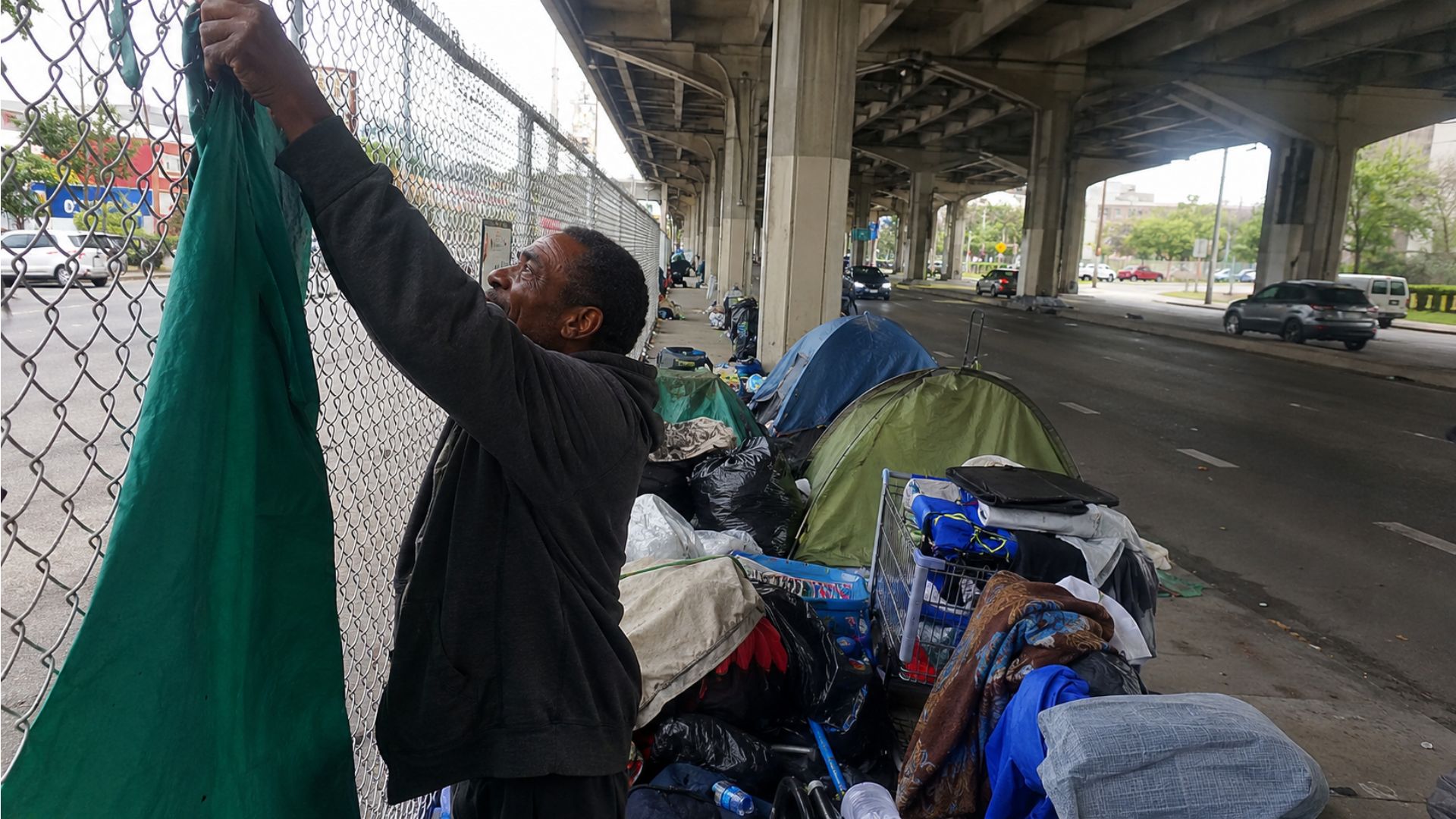

San Francisco, California – David Chen still calls San Francisco home, even when the walk to the corner store makes him feel like the city is asking him to explain why.
He grew up in the Richmond District, moved to the Mission in his 20s, then settled near Civic Center after his divorce because the rent was the only one he could manage. He works maintenance at a private school and takes the bus before sunrise, when the sidewalks are still damp and quiet and the people sleeping outside are just beginning to stir.
Read also: Letter to the editor: Sacramento changed and I miss when people actually let each other merge
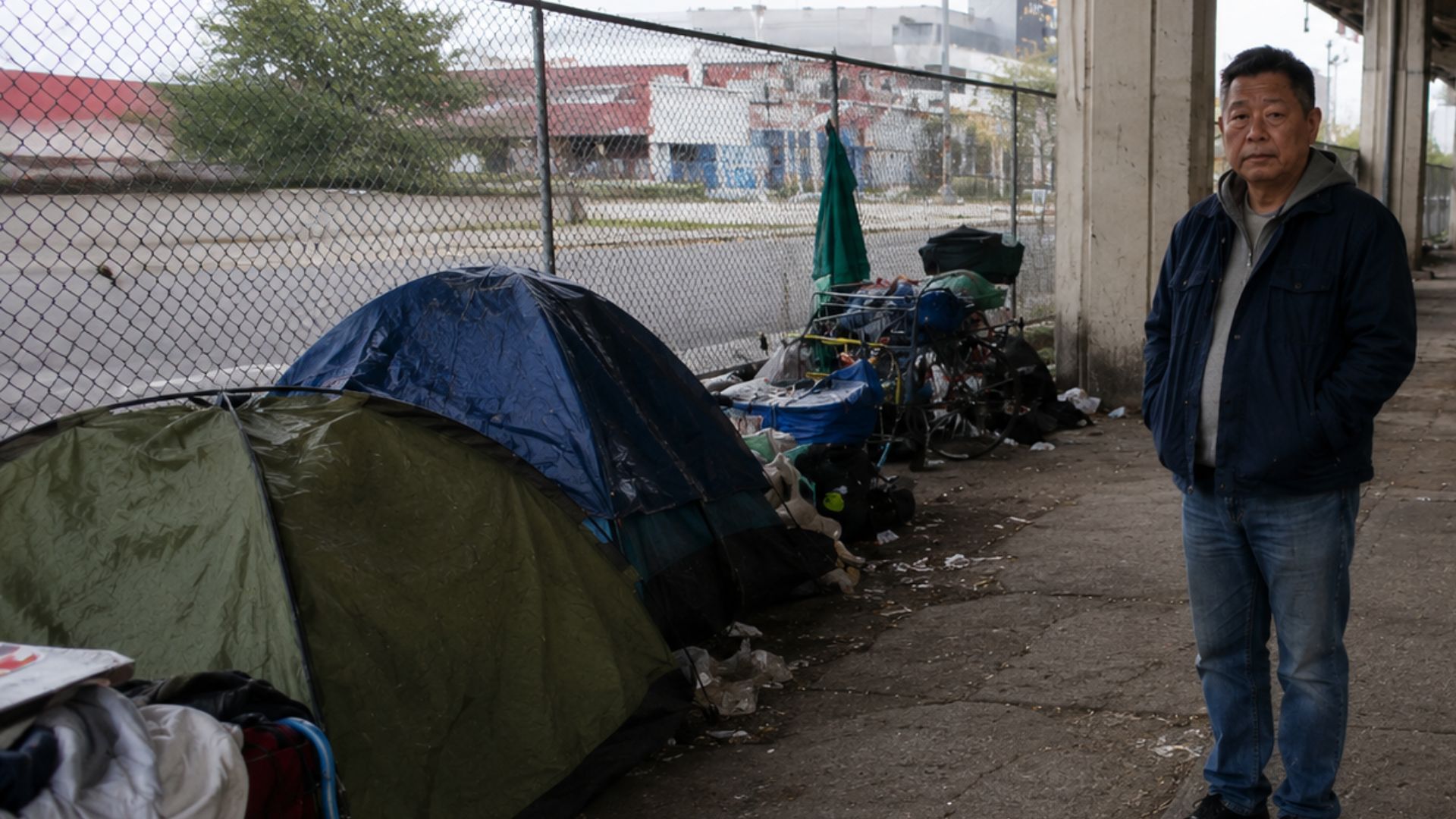
Some mornings, he steps around tents. Some mornings, there are none. Some mornings, a person is curled under a blanket in a doorway with one shoe missing. Other mornings, outreach workers are talking softly to someone who has stopped answering.
David has lived in San Francisco long enough to know that homelessness is not new here. What feels different, he said, is the exhaustion around it.
“Everybody is tired,” he said. “The people outside are tired. The people walking past are tired. The workers trying to help are tired. And the city keeps saying it has a plan.”
That is the tension at the center of San Francisco’s homelessness crisis. The numbers show some progress. The sidewalks still show the damage. The city has built a large and expensive homelessness response system, but thousands of people remain without stable housing, and thousands more pass through the system over the course of a year.
Read also: For Sacramento families, the housing math keeps getting harder
San Francisco’s preliminary 2026 Point-in-Time Count found 7,973 people experiencing homelessness on a single night in January, down from 8,323 in 2024. Overall homelessness declined by about 4%. Unsheltered homelessness fell more sharply, with city officials reporting 3,400 people outdoors, down from 4,354 two years earlier.
Those numbers matter. Fewer people sleeping outside is a meaningful change. But a smaller count does not mean the crisis is small.
The count went down. The crisis did not disappear.
The Point-in-Time Count is the number San Francisco uses most often to measure homelessness. It is required by the federal government and conducted in communities across the country. But it is also a limited tool: one night, one method, one snapshot of a problem that changes by the hour.
That caveat matters in 2026 because the city also changed parts of its counting method. Local coverage of the latest count noted that San Francisco moved from a previous overnight visual count toward more early-morning engagement, while advocacy groups questioned whether the new approach made year-to-year comparisons harder.
According to KQED, the 2026 count also found that 57% of the city’s homeless population was sheltered, families experiencing homelessness increased 15%, and about 500 people remained on the shelter waitlist at the time of reporting.
That is what David notices. A block can look better and the problem can still be unresolved.
“You can clear a corner,” he said. “But where did the person go? That’s the question people stop asking.”
For residents, the visible crisis often becomes a debate about tents, sidewalks, RVs and public drug use. For people experiencing homelessness, the crisis is usually more basic: no room, no lease, no shower, no locked door, no safe place to recover from whatever pushed them outside.
Read also: Sacramento Fire Department faces its own scrutiny as city closes major budget gap
The city’s own data points to a larger universe than the one-night count. A June 2026 homelessness data report presented to city officials noted the difference between the PIT Count and the city’s ONE System, which records people seeking services over a full fiscal year. The report listed 7,973 people in the one-night count compared with 23,561 people recorded through the service system over a year.
That gap is the difference between what San Francisco sees in one night and what the homelessness system has to respond to over time.
Housing costs remain the pressure underneath
San Francisco’s homelessness crisis is often discussed through the most visible symptoms: encampments, mental health crises, addiction, emergency calls, street cleaning, police response and shelter beds.
But the pressure underneath is housing.
Read also: Sacramento traffic is becoming part of daily life. For many residents, that is the problem.
The Census Bureau lists San Francisco’s median gross rent at $2,476 from 2020 to 2024. It puts the median value of owner-occupied housing units at $1,394,500. Zillow estimated the average San Francisco home value at $1,393,773 as of May 31, 2026, up 7.6% over the year.
For many residents, those numbers mean homelessness is not some separate world. It is the far edge of the same affordability crisis pressing on renters, workers, seniors, families and people living on fixed incomes.
David saw that with his older brother, who slept in his car for four months after a landlord sold the building where he rented a room. He had a job. He had a phone. He had a storage unit. What he did not have was enough income to qualify for another place fast enough.
“That changed how I see it,” David said. “Before that, I thought homelessness was far away from my family. Then it was parked outside my mother’s apartment.”
The UCSF Benioff Homelessness and Housing Initiative’s California Statewide Study of People Experiencing Homelessness found that most people surveyed were not outsiders arriving for services; 90% lost their last housing in California, and 75% lived in the same county where they had last been housed. The study also found that nine out of ten had spent time unsheltered since becoming homeless.
That does not explain every individual case. It does challenge one of the city’s most persistent myths: that homelessness is mostly imported. Often, homelessness is local poverty after local rent becomes impossible.
Read also: Sacramento rivers carry the consequences of public decisions
San Francisco spends heavily, but the need keeps moving
San Francisco has not ignored homelessness. The city has spent heavily on shelter, supportive housing, prevention, outreach, behavioral health and services.
The Department of Homelessness and Supportive Housing’s budget materials for fiscal years 2026 to 2028 describe $37.3 million over two years to expand and enhance homelessness prevention services for adults, families, young adults, older adults and people with disabilities. Earlier city budget materials described hundreds of millions of dollars in annual homelessness spending, with most of the department’s budget going toward direct system services.
The scale of spending creates its own public frustration. Residents ask why the problem still looks so severe if the city is spending so much. Advocates ask why so many people remain unhoused if the city has the money. Officials point to the cost of operating shelters and housing in one of the most expensive cities in the country.
All of those questions can be true at once.
A shelter bed costs money. A supportive housing unit costs money. Case managers, security, nurses, behavioral health workers, leases, repairs and nonprofit contracts all cost money. The system is not only trying to move people inside; it is trying to keep thousands of formerly homeless residents housed after they get there.
That is why homelessness policy often feels unsatisfying. Shelter can reduce street homelessness quickly, but it is not permanent housing. Permanent supportive housing can stabilize people with deeper needs, but it takes money and time. Prevention can stop homelessness before it begins, but it is harder to see because the crisis that did not happen never becomes a tent on the sidewalk.
David says the city’s debate often skips the middle.
“People talk like there are two choices,” he said. “Do nothing, or move everyone overnight. But there has to be a real system between those two things.”
The street crisis is also a health crisis
The longer someone remains unhoused, the more homelessness becomes about survival. Unsheltered people face sleep deprivation, violence, infection, worsening chronic disease and constant displacement. People with mental health or substance use disorders often struggle to stabilize without housing. People without those conditions can develop them after months or years outside.
The UCSF study describes homelessness as both a result of poor health and a driver of worsening health. More recent UCSF research has continued to focus on the links among homelessness, chronic disease, disability, behavioral health and access to care.
San Francisco’s overdose crisis deepened the public sense of emergency. The city recorded a record 810 accidental overdose deaths in 2023, according to local tracking by the medical examiner and reporting. Deaths fell in 2024 and preliminary figures suggested improvement continued into 2025, but the loss remains enormous.
For residents like David, the human scale is often clearer than the trend line.
He remembers one man who slept near the library entrance for months. They never had a long conversation. A nod. A “morning.” Sometimes David bought him coffee. Then one week the man was gone. Someone taped flowers to a pole nearby.
“I still don’t know his name,” David said. “That bothers me more than I expected.”
That is one of the quiet harms of persistent homelessness. It teaches a city to witness suffering without knowing what to do with it.
Families are the warning sign
The increase in family homelessness may be one of the most important signals in San Francisco’s latest data.
Family homelessness can look different from the images many people associate with the crisis. It may be a mother and child in a shelter room. A family doubled up until that arrangement collapses. A parent sleeping in a vehicle. A child going to school from a motel or RV.
It is less visible than a tent. It is not less serious. When families fall into homelessness in San Francisco, the cause is often not one bad decision. It is a chain: rent increase, job loss, medical bill, domestic violence, immigration instability, child care gap, eviction, family conflict, no affordable unit available.
A city can reduce tents and still fail families if the cost of staying housed keeps rising faster than wages. David sees families in a different way now because of his brother. After the car, after the showering at relatives’ homes, after the constant searching, his brother eventually found a subsidized room through a nonprofit connection. But David remembers how thin the line was.
“He was still the same person,” David said. “The only thing that changed was the address.”
What San Francisco still has to prove
San Francisco’s homelessness crisis is not hopeless. The 2026 count suggests fewer people are sleeping outdoors. More people are sheltered than unsheltered. The city has added treatment and stabilization resources. Prevention funding is part of the budget conversation. Permanent supportive housing remains a major piece of the system. But the city still has to prove that progress on street visibility can become progress in people’s lives.
That means more than moving people from one block to another. It means enough shelter for those who will accept it, enough treatment for those who need it, enough supportive housing for those who cannot stabilize alone, enough prevention to keep vulnerable renters housed, and enough accountability to show whether programs are working.
It also means telling the truth about what homelessness is in San Francisco. It is a housing crisis. It is a health crisis. It is a poverty crisis. It is a drug crisis for some, a disability crisis for others, a family crisis for many and a public systems crisis for the city as a whole.
No single explanation is enough. No single program is enough. Recently, David passed the same doorway he passes most days. The blankets were gone. The sidewalk had been washed. For a moment, the block looked clear. Then he turned the corner and saw a woman sitting beside two bags, staring at a phone that would not turn on.
He kept walking, then stopped.
“I used to think the crisis was the tent,” he said. “Now I think the crisis is how many people have nowhere better to go.”
That is San Francisco’s test now. Not whether it can count fewer tents. Whether it can make fewer people need one.