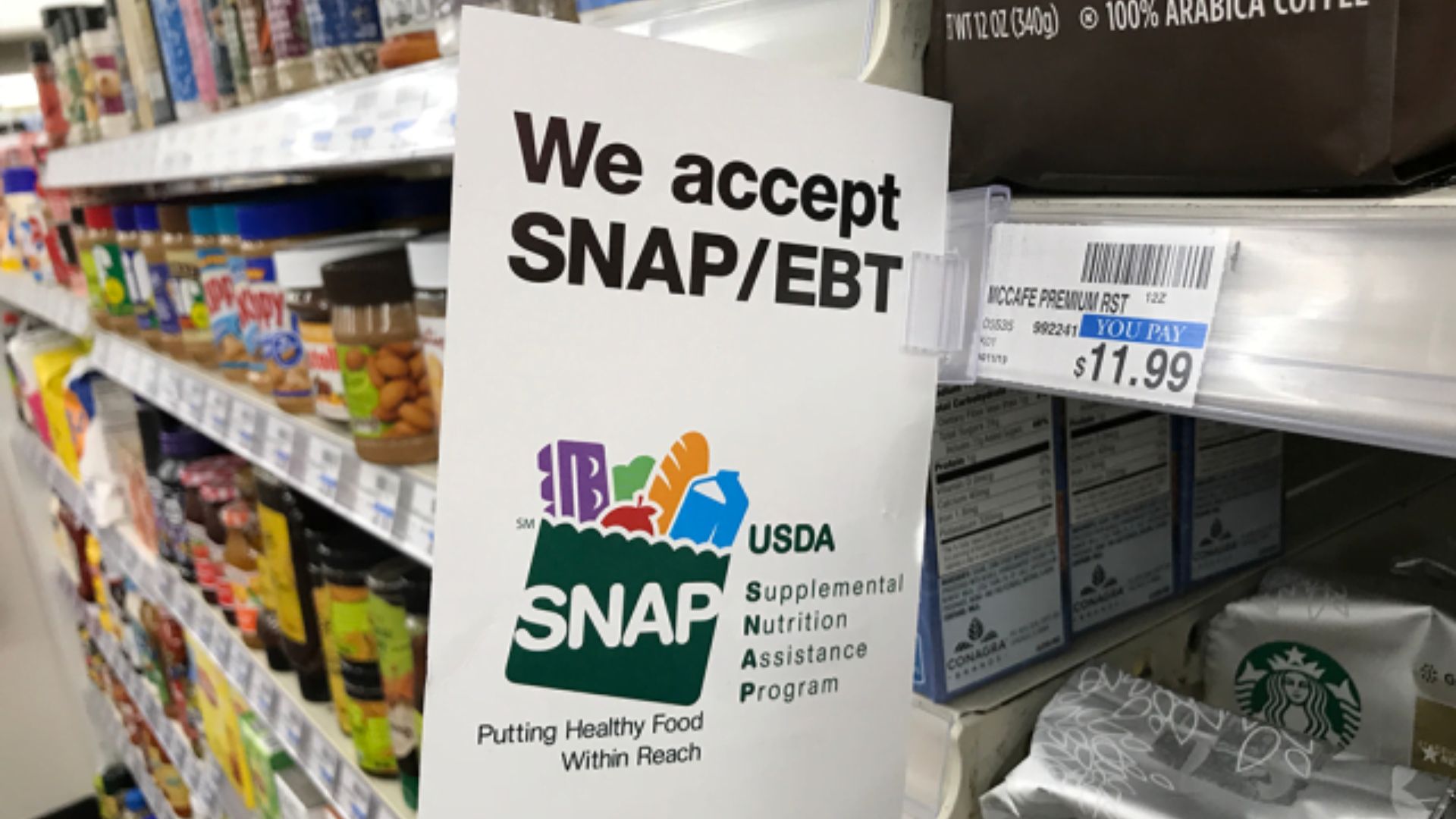

California – For millions of Californians, the grocery budget is already a careful calculation: rent first, utilities next, food stretched across the remaining days of the month. Beginning Monday, June 1, that calculation becomes more uncertain for many households receiving CalFresh, California’s version of the federal Supplemental Nutrition Assistance Program, or SNAP.
CalFresh serves roughly 5.1 million residents across the state. Under new federal rules linked to the One Big Beautiful Bill Act, a broader group of adults must now show that they are working, studying, training for a job or performing approved community service in order to continue receiving food assistance beyond a limited period.
Read also: California-grown food faces new scrutiny as pesticide-linked chemicals reach water and sediment
State officials estimate that more than 660,000 Californians may not currently satisfy the updated requirements. For those individuals, a missed reporting step, a lack of qualifying hours or a misunderstanding about an exemption could mean losing grocery assistance after only three months of benefits within a three-year period.
The new rules focus on adults ages 18 through 64 who are considered physically and mentally able to work and who do not care for a dependent child younger than 14. Under the previous framework, several groups had wider protection from the stricter time limit. That has now changed.
Adults ages 55 to 64 may be subject to the work requirement. So may parents whose youngest child is 14 or older. Veterans, people experiencing homelessness, and people who were in foster care when they turned 18 are also among those newly brought under the stricter standard unless another exemption applies.
The requirement itself is simple on paper, but potentially difficult in daily life. Affected recipients generally must complete an average of 20 hours of qualifying activity each week, or 80 hours per month. That activity may include paid employment, volunteer work, community service, school attendance or participation in an employment and training program.
Someone enrolled in school or job training may qualify by attending at least half-time or completing 20 hours of class time each week. Someone working can meet the rule by averaging 20 hours weekly or earning at least $217.50 per week before taxes, according to the California Department of Social Services.
The consequences can arrive quickly. An affected adult who does not meet the required activity level and does not qualify for an exemption may receive CalFresh for only three full months during a three-year period. After that, assistance may stop unless the person begins meeting the rule, becomes exempt or lives in a county where the rule has been temporarily waived.
That does not mean every adult on CalFresh must suddenly find 80 hours of work. Exemptions remain available, and state and county officials are urging recipients to find out whether one applies to their situation rather than assuming they will lose aid.
Pregnant recipients may be excused from the rule. So may people who cannot work at least 20 hours a week because of a physical or mental health condition, people responsible for a child under 14, and people receiving or applying for certain disability-related benefits. Exemptions may also be available for people affected by domestic violence, substance addiction or chronic homelessness when a physical or mental health condition prevents them from working.
The revised policy also preserves an exemption for individuals who identify as Indian, Urban Indian or California Indian under federal law, as well as certain participants in Office of Refugee Resettlement training programs.
Seven California counties have another layer of temporary protection. Residents of Alpine, Colusa, Imperial, Merced, Monterey, Plumas and Tulare counties are currently exempt from the stricter able-bodied adult time-limit rule through October 31, 2026. In those counties, eligible residents may continue receiving CalFresh beyond three months even when they are not meeting the usual participation requirement. The waiver is connected to local labor market conditions.
Everywhere else, community organizations are preparing for the effects of the shift. In Santa Clara County alone, about 55,000 residents could be affected, according to local leaders who met in May to discuss the approaching changes. The concern is not only that people may lose food aid, but that many will then turn to local food banks and nonprofit organizations that are already serving families struggling with the cost of living.
Marie Bernard, executive director of Sunnyvale Community Services, described the pressure facing households in Silicon Valley, where high incomes and global wealth exist alongside families unable to comfortably cover basic expenses. Her warning came as South Bay Assemblymember Alex Lee gathered anti-hunger organizations to consider how the region could respond once the new federal rules began affecting recipients.
Food banks say they are already operating near their limits. If large numbers of CalFresh recipients lose monthly benefits, organizations distributing emergency groceries may face heavier demand without enough food, staffing or funding to close the gap.
State lawmakers, including Lee, have secured additional funding for food banks and service providers. Still, advocates say that assistance may not be enough if tens of thousands of households in individual counties begin seeking food support at the same time. San Mateo County’s Human Services Agency has taken another approach, offering special Saturday hours to help residents apply for benefits and understand the changing requirements.
Anti-hunger advocates have also questioned the central idea behind the rules: that stricter time limits will help recipients move into steady employment. Jared Call, director of public policy and advocacy for the California Association of Food Banks, has said research does not show that these requirements improve employment outcomes. The organization argues that such rules more often remove people from food assistance than connect them with reliable jobs.
The California Association of Food Banks has estimated that close to 740,000 Californians could be at risk of losing benefits over the coming year as the new requirements take hold.
Read also: Extreme heat planning becomes central to Sacramento’s sustainable growth vision
California’s rollout comes after SNAP participation fell sharply across the United States. Federal data cited by The Associated Press showed that enrollment dropped from about 42.83 million recipients in January 2025 to roughly 38.55 million in January 2026, a decline of nearly 4.3 million people. Much of that decrease occurred after the federal legislation was signed in July 2025 and states began implementing its changes.
The Congressional Budget Office previously projected that provisions in the law would reduce SNAP participation by about 2.4 million people in an average month over the 2025-to-2034 period.
Governor Gavin Newsom criticized the federal legislation before California began enforcing the updated CalFresh rules, calling it “not cost-saving” and “not smart,” as well as “cruel, costly, and a significant encroachment on states’ rights.” His administration has not stopped the federal deadline, however, and counties must now carry out the new eligibility standards.
For recipients, the most urgent step is not to wait until benefits disappear. Californians can review their cases through BenefitsCal, contact their county human services agency or consult the state’s CalFresh work requirement guidance. The CalFresh Benefits Helpline is also available at 1-877-847-3663.
As June begins, the policy debate continues in Sacramento and Washington. But for households relying on CalFresh to purchase milk, bread, produce and other everyday groceries, the issue is immediate: understanding the new rules could determine whether food assistance remains on the table in the months ahead.