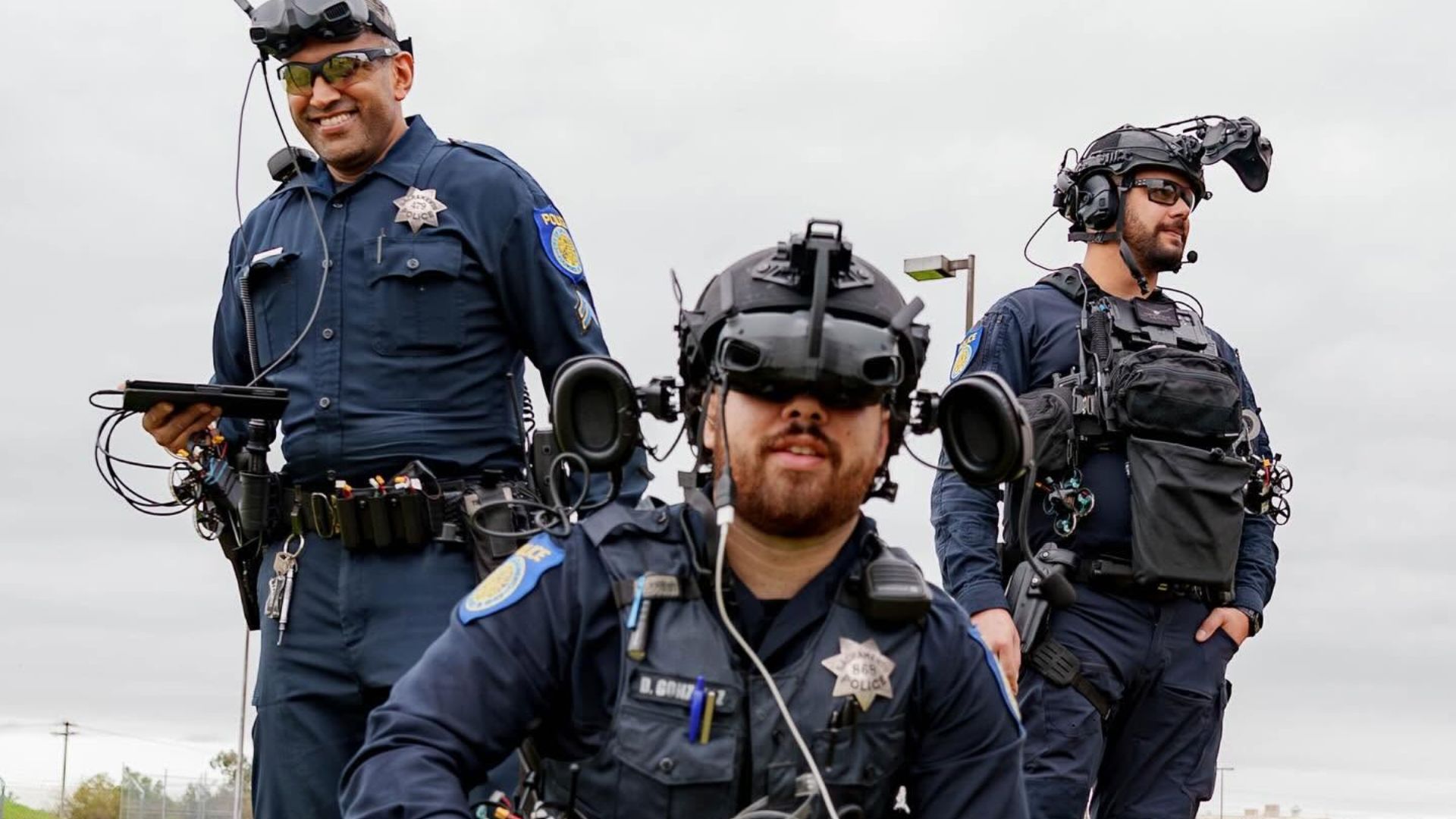

Sacramento’s public safety debate now sits in a strange place: the city is spending far more on policing than it did a decade ago, while its own public data shows crime moving in the opposite direction.
The numbers do not line up neatly, and that is the point. In FY 2015/16, the Sacramento Police Department’s proposed budget stood at $125.2 million from all funding sources. The same city report said the department had authority to fill 1,014.8 full-time-equivalent positions, including 725 sworn and 289.8 civilian FTE.
A decade later, the FY 2026/27 budget put the department at $253.6 million, with the department described as having 693 sworn positions and 337.5 professional staff positions. Depending on the staffing series used, sworn positions are down from the mid-700 range to just under 700, even as the department’s total budget has roughly doubled.
At the same time, Sacramento’s own crime measures show a decline.
The FY 2015/16 police budget report listed Part 1 crimes reported per 1,000 residents at 41.5 for FY14 actuals, with 39.2 estimated for FY15 and 39 targeted for FY16. The FY 2026/27 budget lists Part 1 crimes reported per 1,000 residents at 37.43 in FY23, 33.94 in FY24, 29.10 in FY25, 27.88 estimated for FY26 and 28.49 targeted for FY27. That is not a perfect decade-long crime study, and the city warns that crime data systems change over time. But the public budget books still tell a clear story: the spending line rose sharply while the reported crime-rate line fell.
Read also: Measure U was sold as a community lifeline. Sacramento’s next challenge is showing the results.
This does not automatically prove waste. It also does not prove success. It proves something more important for taxpayers: Sacramento needs a clearer public explanation of what residents are buying with the extra money.
The city’s FY 2026/27 police budget shows the overwhelming share of spending in employee services. The department budget summary lists $235.7 million for employee services, $14.6 million for services and supplies, about $6 million in multi-year operating projects, and a total police budget of $253.6 million.
The General Fund share is $249.1 million, while Measure U accounts for about $3.9 million in the police budget. The largest office by budget is Operations, at $113.3 million, followed by Investigations at $58.5 million, Specialized Services at $44.5 million, Strategy and Compliance at $29.6 million, and the Office of the Chief at $7.9 million.
That breakdown matters because the public often hears “police budget” and thinks only of patrol officers. But the modern police department is also a technology system, a legal compliance system, a records system, a training system, a dispatch system, a recruiting pipeline, and a public-facing accountability machine.
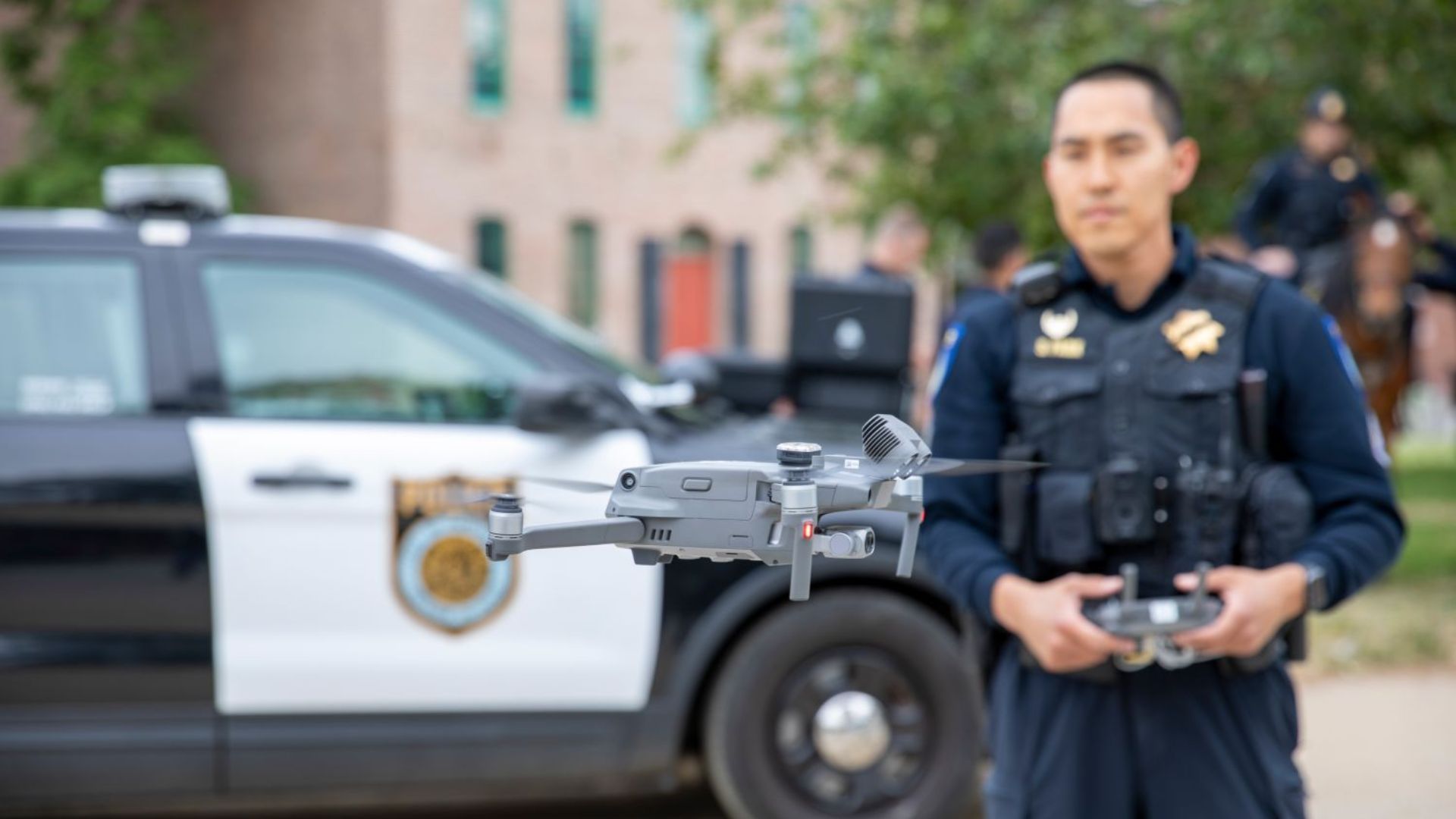
The city’s budget documents point to investments in Police Observation Devices, automated license plate readers, unmanned aerial systems, a public safety camera network, digital forensics, translation services, records-request improvements and even artificial intelligence-assisted redaction work.
Some of those investments may help explain how a department can spend more while employing fewer sworn officers. More money is going into equipment, technology, compliance, support staff, benefits, systems and specialized work. The department also created an Office of Strategy and Compliance in 2023 to manage legal mandates, public records, POST requirements, use-of-force review processes, body-worn camera work, Sacramento Community Police Review Commission recommendations and military-equipment reporting.
The department’s own mission language has also widened. In the FY 2026/27 budget, Sacramento police say they are focused on community policing, transparency, data-driven strategies, crime prevention, strong partnerships and proactive enforcement.
Read also: Sacramento’s rivers carry more than water. They carry the weight of public decisions.

The same section lists the Office of Violence Prevention, recruiting, training, communications, K9, SWAT, traffic, air operations, internal affairs, transparency and public safety technology as pieces of the larger structure.
That larger structure costs money. But the investigative question is whether the city has built the public dashboard needed to judge it.
Sacramento does release data.
The Police Department provides downloadable Computer Aided Dispatch and Records Management System data through the city’s Open Data Portal, and residents can also view neighborhood crime through the Community Crime Map. The department explains that CAD files represent annual calls for service for the current year and five years of archives, while RMS files include crime reports and some reports where information was gathered even if no criminal threshold was met.
The same page also warns users not to treat those extracts as the same thing as official UCR or NIBRS statistics. Records can be reclassified. Dispatch call types can change. Some location data is withheld or limited because of confidentiality laws.
The city is divided into seven police districts, which are then divided into beats, but the public still has to do much of the hard work itself if it wants to compare calls, crimes, officer staffing, response times, violence, homelessness-related calls and spending by district.
That is the district-level gap. Sacramento has data, but not always a simple public answer.
A resident in one district may see the issue through car break-ins, sideshows or slow response times. Another may see it through encampments, park conditions, trash, shootings or youth violence. Another may simply ask why their neighborhood feels under-served while the police budget keeps climbing.
Citywide totals flatten those differences. A falling citywide crime rate does not mean every district feels safer. A rising police budget does not mean every district gets equal service. A lower sworn count does not mean every area loses coverage in the same way.
The FY 2026/27 budget gives some clues about how the department thinks about geography.
Sacramento police said a domestic-violence-focused operation in the northern area followed an evaluation that found incidents were disproportionately higher there and concentrated in three geographic areas. The department reported a 19.8% reduction in reported domestic violence incidents in those focus areas during the operation. That is the kind of district-level result the public should be able to see more often: what problem was identified, what resources were sent, what changed, and what it cost.
The department also tracks response times and 911 call answering.
The FY 2026/27 budget lists median response time for priority 2 and 3 calls at 12:17 in FY23, 11:56 in FY24, 11:50 in FY25, 11:29 estimated for FY26 and 11:39 targeted for FY27. It also lists the share of 911 calls answered within 15 seconds at 87% in FY23, 84% in FY24, 87% in FY25, 87% estimated for FY26 and 90% targeted for FY27. Those are useful measures. But they still do not show, in a plain public format, whether District 1 is getting the same response performance as District 8, or whether high-call areas are getting staffing aligned with demand.
That missing connection between money and neighborhood outcomes is where the opportunity-cost debate begins.
Sacramento adopted its FY 2026/27 operating and capital budgets on June 10, closing a $66.2 million General Fund gap inside a $1.7 billion all-funds budget. The adopted budget includes an $898.3 million General Fund and takes effect July 1. City officials said the budget closes the gap through expenditure reductions, operational efficiencies, funding shifts and revenue strategies.
Mayor Kevin McCarty described the process this way: “This year, the City Council tackled a tough budget process, but we started early to ensure community input. Last year, we picked the low-hanging fruit by sweeping reserves and vacant positions. Unfortunately, while deeper cuts were made with this budget, we built a stronger foundation for future budgets and protected what is most important for the City of Sacramento: our employees and core City services. We were also able to restore $4.5 million in services that will have a profound impact, including wading pools, youth programs, and violence prevention programs.”
City Manager Maraskeshia Smith also framed the budget as a trade-off document, saying: “This budget required difficult decisions and trade-offs, but it reflects a thoughtful approach to addressing Sacramento’s structural deficit while continuing to invest in our community. We are making meaningful progress toward long-term financial stability, and that puts the City on a stronger path forward.”
Those statements are important because they put police spending inside the larger question facing Sacramento: what does the city protect first when money gets tight?
The proposed budget documents show that the city originally looked at broad reductions, including filled and vacant positions. In the March baseline, the city identified savings from many areas, including $7.1 million from police, $5.6 million from fire, $4.8 million from Youth, Parks and Community Enrichment, and $7.5 million from other departments.
Later restorations included the Police Department Magnet Academy, partial restoration of fire suppression vacancies, partial restoration of park maintenance outsourcing, the Access Leisure Program, and community center and senior center operating hours.
The budget also states that while some filled sworn public safety positions were eliminated, no sworn police or fire staff would be separated from the city; instead, they would move into available vacant sworn positions. That choice protected sworn public safety employment from direct separation while other services faced reductions, vacancies, shifts and restorations.
This is where the numbers become political, even when the math is dry. A dollar used to preserve police capacity cannot also maintain a park bathroom, fund a youth program, expand a community ambassador model, increase shelter outreach, or repair neighborhood infrastructure. The reverse is also true: a dollar moved away from police may affect response times, investigations, traffic enforcement, violence reduction, compliance, training or emergency readiness. The budget does not answer the values question. It only records the decision.
Sacramento’s homelessness numbers make that trade-off sharper. Sacramento Steps Forward reported that the 2026 Point-in-Time Count tallied 7,458 people experiencing homelessness in Sacramento County, a 13% increase from the prior count two years earlier.
Of that total, 4,205 people were unsheltered and 3,253 were sheltered. The organization said shelter and transitional housing counts rose by 582 people, while unsheltered homelessness increased by 261 people.
Homelessness is not simply a police issue, but it often becomes part of the police workload. Calls about encampments, welfare checks, public spaces, blocked sidewalks, behavioral health concerns and quality-of-life complaints all land somewhere in the city system.
If Sacramento spends more on police because officers are asked to respond to more nontraditional public safety problems, that should be made explicit. If the better answer is to spend more on housing, outreach, treatment, sanitation, youth programming or parks, that should be measured too.
The police budget’s defenders can point to falling Part 1 crime rates, improved response-time targets, technology upgrades, targeted violence strategies and public safety as a core city service. Critics can point to the same falling crime rates and ask why the department costs twice as much when sworn staffing is lower. Both sides can claim part of the record. Neither side should be allowed to skip the data.
The next step is not just another budget hearing. It is a clearer public accounting.
Sacramento could publish a district-level public safety dashboard that ties together police district, council district, beat, calls for service, reported crimes, response times, shooting victims, traffic enforcement, officer deployment, overtime, specialized-unit activity, clearance rates, youth violence investments, 311 data and non-police service referrals. It could show where spending follows need, where it does not, and where non-police interventions reduce demand. The city already has many pieces of this system. What is missing is the public-facing bridge between dollars and outcomes.
That bridge matters because the debate is no longer only about whether Sacramento should spend more or less on police. The city already spent more. A lot more. The question now is whether residents can see what changed because of it.
A decade ago, Sacramento budgeted about $125 million for its police department and was still rebuilding services after recession-era cuts. Today, it is budgeting more than $253 million while facing structural deficits, rising homelessness, pressure on parks and youth programs, and continued public concern about safety.
Crime-rate indicators have moved down. Sworn staffing has not grown with the budget. Technology, compliance, benefits, support systems and specialized work have filled much of the space between those two facts.
That is the crossroads. Not police versus community. Not safety versus services. Sacramento’s harder question is whether public money is being matched to public need, district by district, outcome by outcome, year by year. Until the city makes that connection easier to see, the police budget will remain both one of Sacramento’s biggest safety tools and one of its most contested opportunity costs.