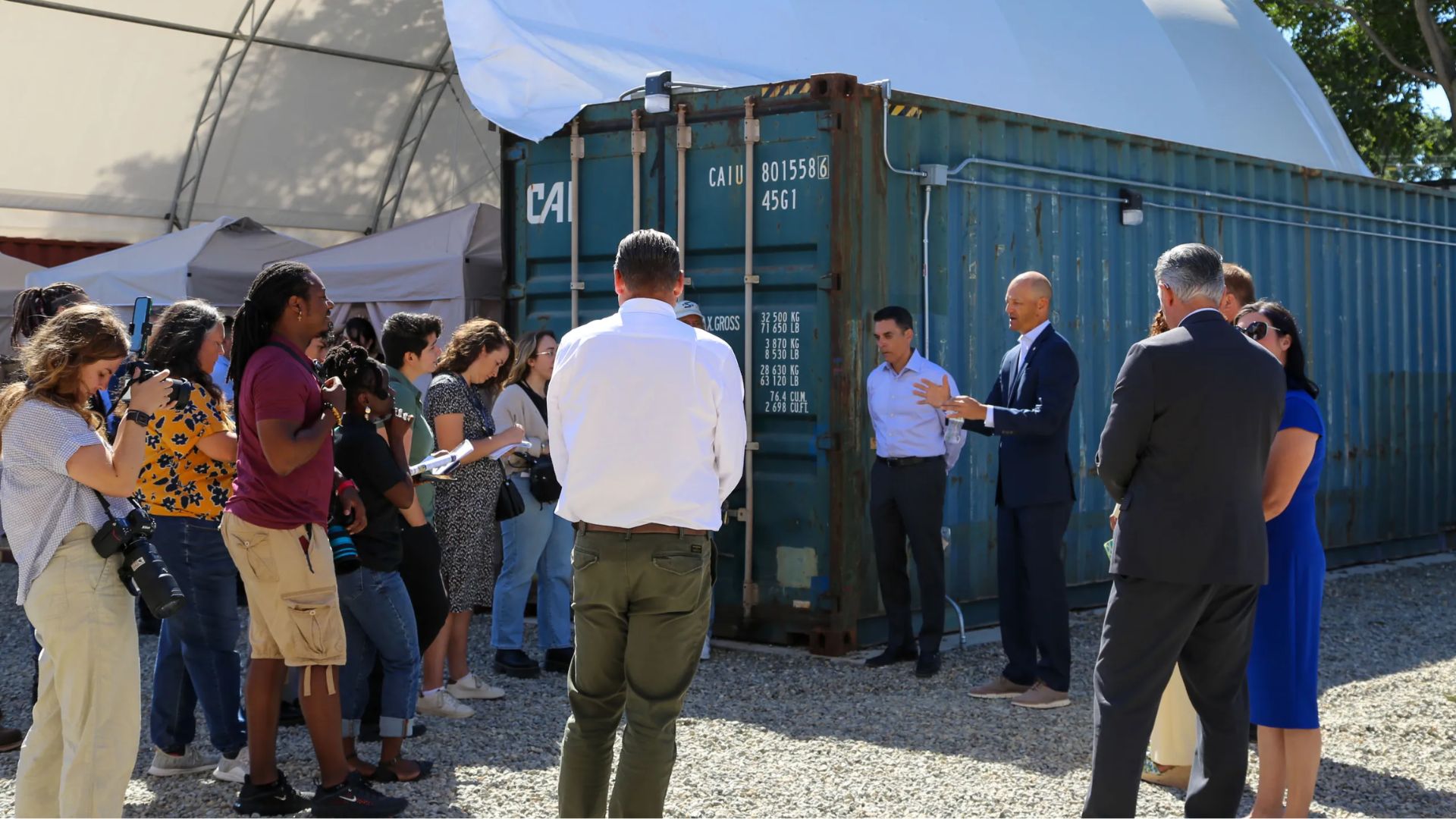

Sacramento, California – Sacramento’s newest answer to one of its hardest street-level problems is not a building. It is a gravel lot, rows of raised wooden platforms, shade canopies, tents, storage bins and a clear admission from City Hall: the path from a sidewalk encampment to permanent housing often begins somewhere far less perfect.
The city opened its new Safe Camping site in the River District at 291 Sequoia Pacific Boulevard this week, creating space for roughly 100 tent platforms and as many as 100 to 125 people. The site is aimed largely at people already living nearby, especially around North B and North C streets, where officials said more than 100 people had been staying unsheltered.
City leaders marked the opening Tuesday, June 23, with a tour and news conference. Outreach workers were expected to begin signing people up immediately, with the first residents arriving Wednesday, June 24.
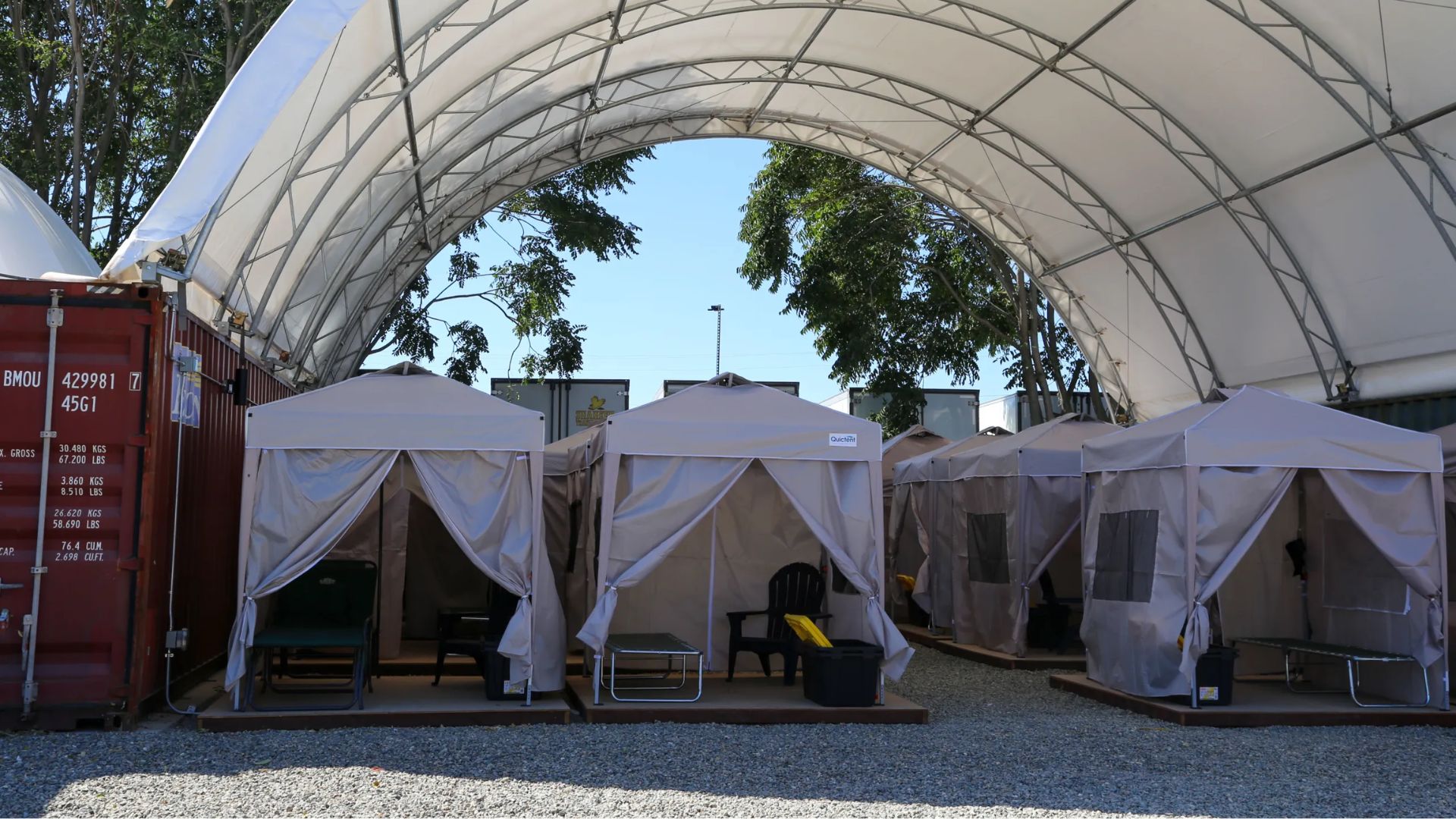
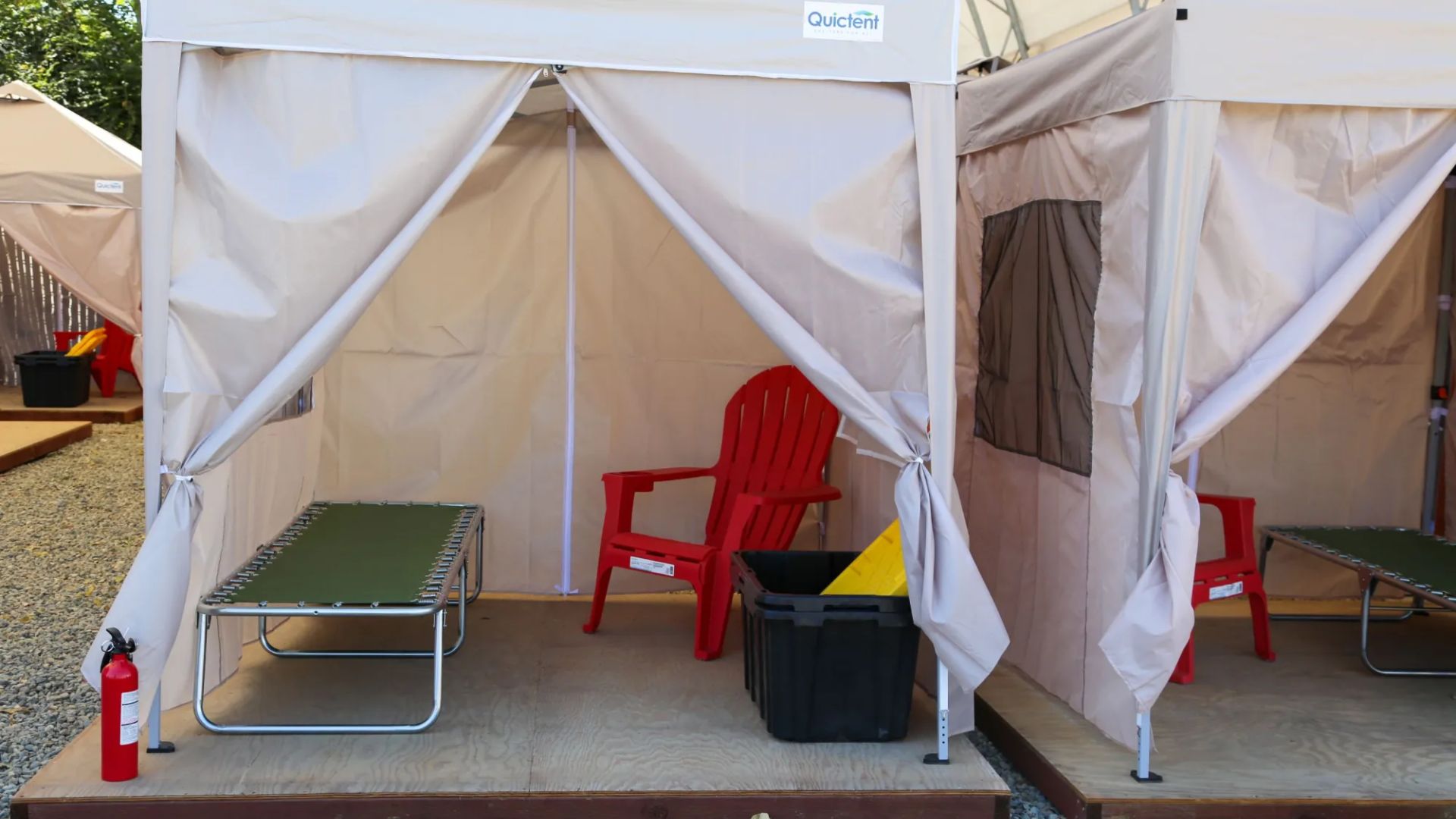
The site is simple by design. Each person gets a city-provided tent on an 8-by-8-foot wooden platform, a raised cot, two storage bins and a chair. The grounds include showers, porta-potties, phone charging, a common area, space for service providers and 24/7 security. Pets are allowed, with support connected to Front Street Animal Shelter.
But officials were careful not to oversell it.
“There’s not individual AC units. There are not individual bathroom facilities for everybody here,” Mayor Kevin McCarty said. “But I’d like to go for a walk 100 yards down the street and ask, ‘Is it better than what we have outside?’ So we can’t let the perfect be the enemy of the good.”
That sentence captures the political and practical tension around the project. Sacramento is under pressure to move faster on homelessness, but its own recent audit raised questions about how well shelter spending is being tracked. The city reviewed about $63.2 million in shelter-related programs over a recent two-year period and found weak data tying services to long-term outcomes such as stable housing.
At the same time, the need remains visible. The 2026 Point-in-Time Count found about 7,458 people experiencing homelessness across Sacramento County, up about 13% from 2024. Countywide unsheltered homelessness rose to 4,205. Inside the city, however, unsheltered homelessness dropped by 590 people, a 19% decline.
McCarty called the numbers a “mixed bag,” saying the city has made progress while still facing an unfinished crisis.
Councilmember Phil Pluckebaum said the River District location was chosen because homelessness has been concentrated there for decades.
“The idea is to get folks off the street immediately in this neighborhood and start transitioning them into services so that they can start moving toward permanent supportive housing,” Pluckebaum said.
The River District site also reflects lessons from earlier Sacramento experiments. The city’s first sanctioned camping sites opened in 2021 near W and X streets. Miller Park followed in 2022 but struggled during winter storms before closing in 2024. Camp Resolution, a self-governed site, was later closed and described by officials as a failed experiment.
This time, the city added raised platforms, larger shade structures and basic infrastructure, including water and electricity. Seasonal upgrades are expected, from fans or swamp coolers in summer to insulated tents in winter.
Construction cost about $2.5 million, with annual operations estimated around $1.2 million. City Manager Maraskeshia Smith said the site adds another option to Sacramento’s homelessness response system while connecting people to housing resources, documents, jobs, behavioral health support and case management.
“The long-term solution is to get people into housing, but that doesn’t happen right away,” Smith said.
For people like James Hailey, who planned to use the site, the promise is not luxury. It is safety, paperwork, medical access, a path toward work and maybe, finally, a door that does not lead back to the street.