
Sacramento, California – Roger Cleaves was not thinking about a citywide traffic safety plan when he watched cars move too fast along Pocket Road. He was thinking about the person on foot.
“I was lucky I didn’t get hit,” Cleaves told News Sickle Arrow, describing a hit-and-run incident he had witnessed. In another comment, he said he had witnessed a near-fatal crash near a school, where the victim was walking on the sidewalk with children. For Cleaves, the question was not abstract.
“What is being done to address that?” he asked.
Across Sacramento, Lindsey Song had her own version of the same concern. Her focus was 12th Avenue and Martin Luther King Jr. Boulevard, near an elementary school, a community garden and a bus stop. The road curves. A small hill limits visibility. When a bus is stopped, she said, the crossing can feel even more exposed.
Crossing there, she said, is “scary at the best of times.”
Many other similar comments are now part of Sacramento’s public review of its draft Vision Zero Action Plan Update, a document that lays out how the city plans to reduce serious and fatal traffic crashes.
The city released the draft after months of community outreach, including workshops, neighborhood conversations, virtual meetings and an online survey. Residents can review the recommendations and submit comments through Aug. 17 before the plan is finalized.
For people like Cleaves and Lindsey, the draft is not only a planning document. It is a question of whether Sacramento can turn warnings from residents into changes on streets where people already feel at risk.
“Transportation safety solutions are most effective when they are informed by the people who use our streets every day,” Jennifer Donlon Wyant, Sacramento’s mobility and sustainability division manager, said in the city’s announcement.
“The draft plan reflects what we heard from residents across Sacramento, and we encourage the community to review the recommendations and help us refine the final plan.”
Sacramento adopted its first Vision Zero Action Plan in 2018, after setting a goal in 2017 to eliminate traffic deaths and serious injuries by 2027. The updated plan uses newer crash data, safety analysis and community input to identify where the city should focus next. The numbers show why the update carries urgency.
Between 2015 and 2024, 332 people died on Sacramento streets, according to the city’s executive summary. That equals one person every 11 days. Over the same period, the city recorded 22,538 injury collisions, including 1,656 severe-injury or fatal collisions. The crash data also included 1,941 collisions involving people walking and 1,966 involving people biking.
The burden falls heavily on those outside cars. According to the city, people walking and biking were involved in nearly half of all serious-injury and fatal crashes, even though they account for just over 1% of travel on Sacramento streets. Half of all serious and fatal crashes occurred in disadvantaged communities, while those areas make up about 30% of the city’s street network.
That is the gap Cleaves sees when he talks about Pocket Road.
“It is not enough to tell people to be careful,” he said. “The street has to make drivers slow down before something happens.”
Read also: Sacramento promised and delivered open data, but now it faces a tougher test of real accountability
The draft plan tries to address that through a refined High Injury Network, the small share of Sacramento streets where a disproportionate number of severe and fatal crashes occur. The updated approach also gives priority to crashes involving people walking, biking, youth and older adults, as well as locations near schools and disadvantaged communities.
For Lindsey, that kind of priority matters because the danger she described is not only about one intersection. It is about the daily mix of children, buses, drivers, curves, hills and people trying to cross without a signal.
“You learn to wait longer than you should have to,” she said in her comment. “You wait for every car to clear, because you do not trust that the next driver sees you.”
Sacramento’s crash patterns help explain that fear. From 2015 to 2024, unsafe speed was listed as the top primary collision factor in the city’s presentation, accounting for 15% of the top factors. Traffic signals and signs accounted for 12%, DUI for 12%, automobile right-of-way violations for 10% and improper turning for 10%. The most common serious crash types were vehicle-pedestrian collisions at 31% and broadside crashes at 30%.
Speed is especially central to the city’s safety work. In a Vision Zero safety strategies presentation, the city showed that a person hit by a vehicle at 20 mph has a much higher chance of surviving than someone hit at 30 or 40 mph, using data attributed to the Federal Highway Administration and AAA Foundation for Traffic Safety.
Read also: Sacramento Fire Department faces its own scrutiny as city closes major budget gap
That is why the draft action list includes several speed-focused steps. Sacramento proposes reviewing capital projects for opportunities to lower posted speed limits, identifying eligible business activity districts where 20 mph limits could be established, creating a Speed and Conflict Management Plan, supporting legislation for automated speed enforcement in Sacramento and completing projects focused on reducing vehicle speeds on arterials.
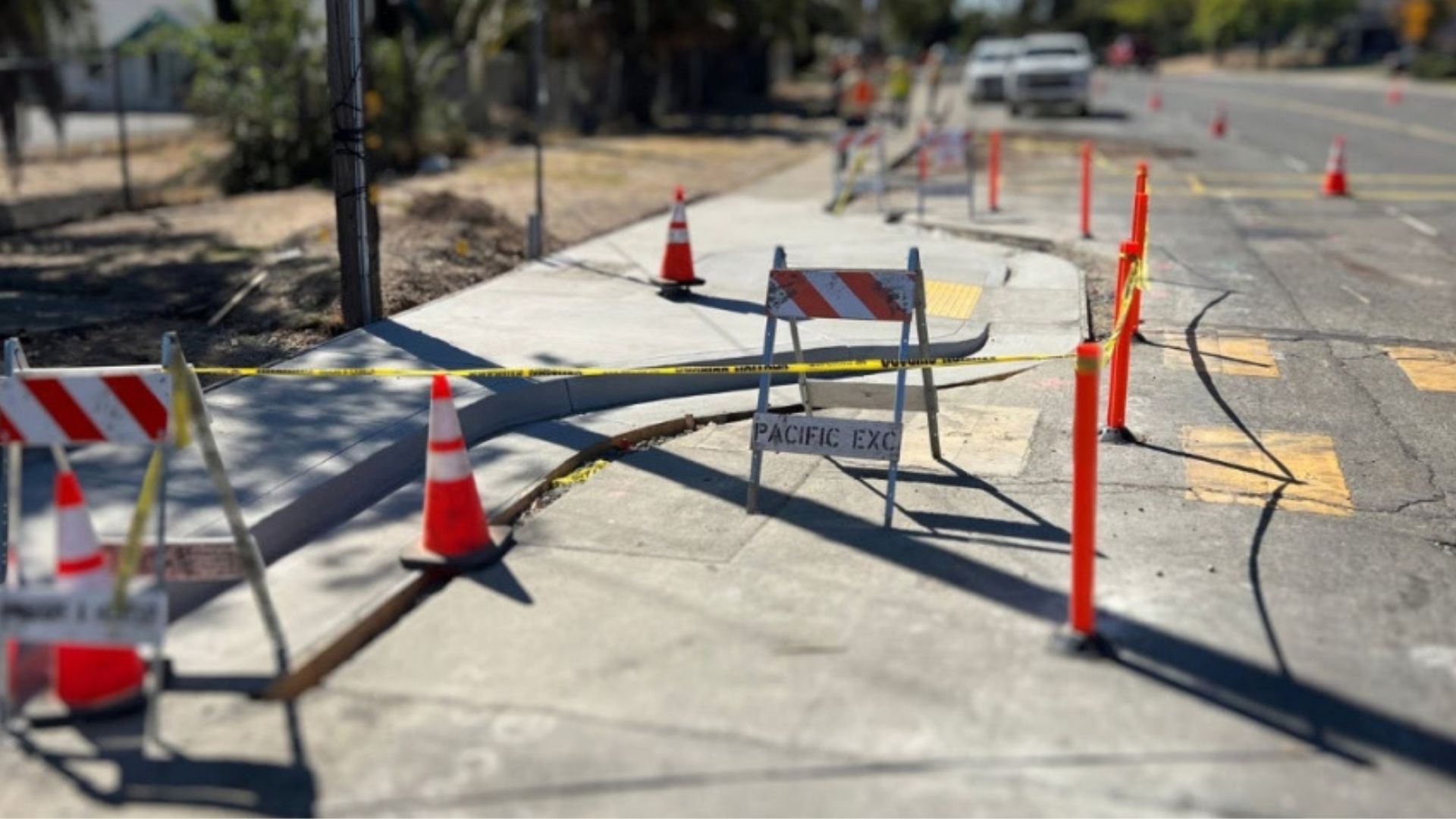
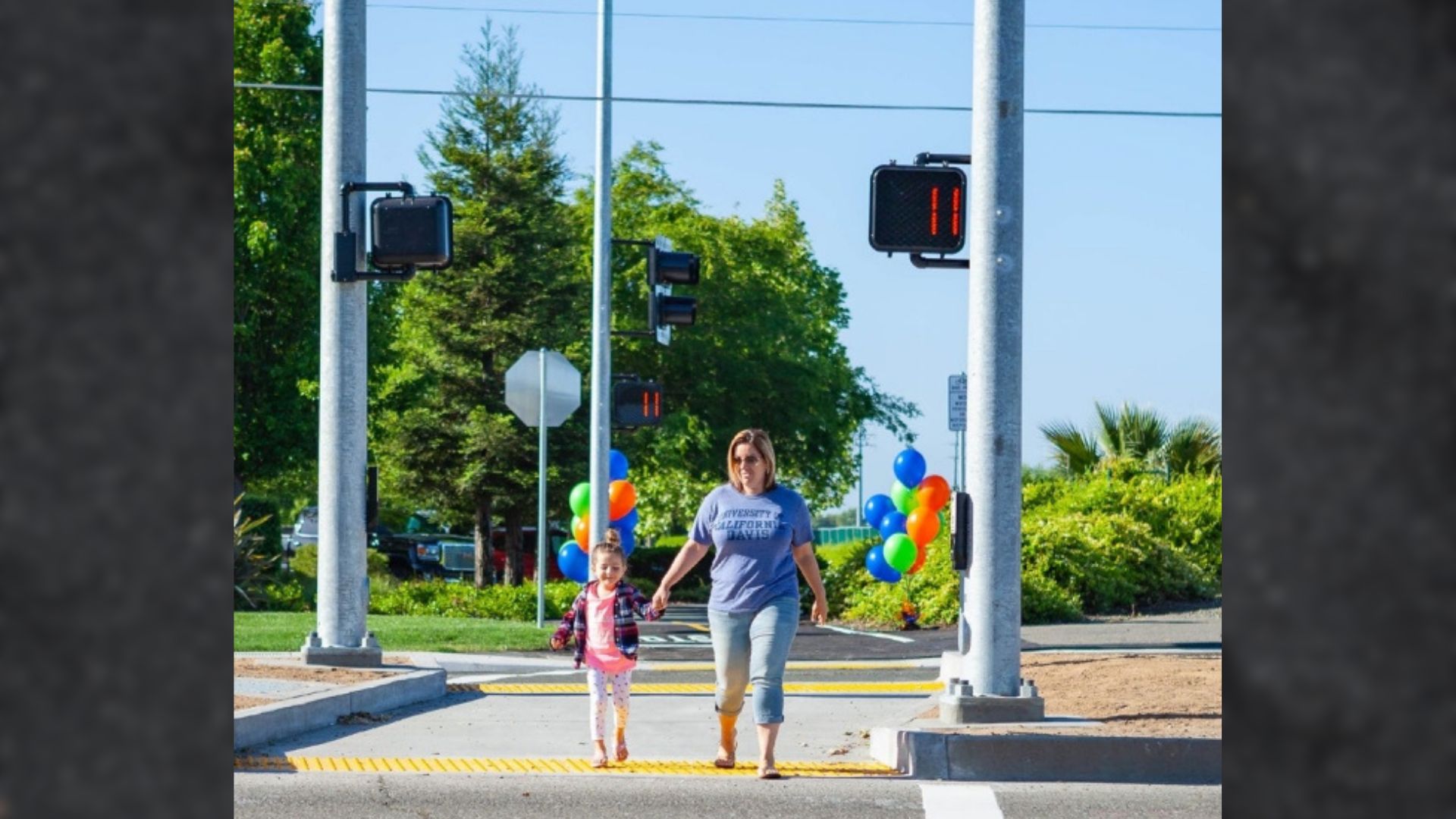
The plan also includes physical changes. The city proposes completing sidewalk gaps identified in the Streets for People Plan, continuing work on priority corridors from the 2018 Vision Zero plan, completing 10 projects that separate severe conflicts at intersections, updating street design standards, updating traffic signal guidance and installing at least 10 pedestrian crossing treatments on the High Injury Network. At least five of those would be within a quarter-mile of parks and schools, and at least five would be within a quarter-mile of bus or transit stops.
For Lindsey, that language sounds close to what she has been asking for.
“A bus stop should not make the crossing more dangerous,” she said. “If the city already knows where people are walking and where children are nearby, then those places should not have to wait years.”
Sacramento says it has already made progress under Vision Zero. The city lists 115 schools with reduced speed limits, 17 school-zone safety improvements, eight major corridor upgrades, three engineering standard updates, 39 intersections with enhanced visibility, 17 quick-build projects, 10 new traffic signals, a new quick-build team and a quicker-build pilot program.
But the public comments show how residents measure progress differently. They look at whether a car slows down near a school. Whether a crosswalk is visible at night. Whether a bus stop has a safe crossing nearby. Whether a parent with children can use the sidewalk without feeling exposed.
Cleaves said that is where the city’s promise will be tested.
“If this plan is going to mean something, it has to show up on the streets people already told the city about,” he said. “We should not have to wait for another crash to prove a place is dangerous.”
The draft plan also calls for a red-light running camera program, a continuation of the Vision Zero Tactical Action Group, regular online crash-data updates, 10 low-cost safety improvements each year and quarterly Vision Zero meetings involving Public Works, Police and Fire. Other actions include evaluating transit stop placement, improving access to transit stops, building out the separated bikeway network and launching high-visibility enforcement campaigns focused on speeding, yielding to pedestrians and safety near transit stops, schools and parks.
Read also: Sacramento traffic is becoming part of daily life. For many residents, that is the problem.
That range of actions reflects the city’s larger safety philosophy. Vision Zero treats fatal and serious crashes as preventable incidents, not unavoidable accidents. Sacramento’s update says safer streets require engineering, enforcement, education, data, progress tracking, community engagement and partnerships with local and regional agencies.
Still, residents often speak in simpler terms.
They want cars to slow down. They want crossings that feel safe. They want lighting, signs, signals, sidewalks and enforcement in the places where people already know the danger.
To gather more input, the city is hosting five workshops from 5:30 to 7 p.m. In-person meetings are scheduled for June 22, 2026 at Hart Senior Center, July 1, 2026 at Robertson Community Center and July 30, 2026 at La Familia’s Maple Neighborhood Center. Virtual workshops are scheduled for June 25, 2026 and June 29, 2026, with registration required. Residents can also review the draft plan and submit comments online through VisionZeroSac.org.
By the time the final plan is complete, Sacramento will have new maps, new priorities and a new list of actions. Cleaves and Lindsey are asking for something more immediate: proof that the city’s data will lead to decisions on the ground.
“You should be able to walk near a school without wondering if the street is designed against you,” Lindsey said.
Cleaves put it another way.
“A plan matters when people can feel the difference,” he said. “Until then, it is still just paper.”